
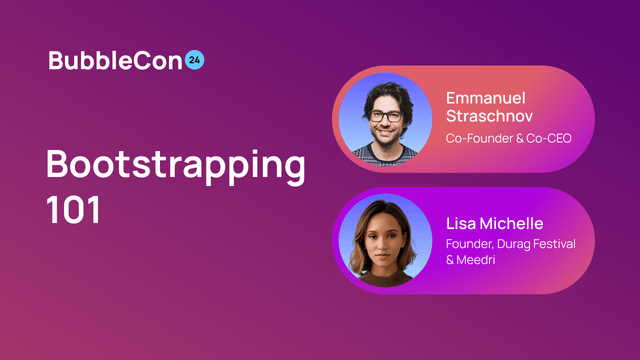
At BubbleCon 2024, we hosted a Q&A with co-founder Emmanuel Straschnov to talk about how he and Josh Haas bootstrapped Bubble for seven years and turned it into a company that enables other founders to bootstrap, too.
“About 80% of Bubble founders plan on bootstrapping. That’s why we built this technology — Bubble enables bootstrapping by reducing the cost of development,” said Emmanuel.
Joined by Lisa Michelle, Founder of Durag Festival and Meedri, Emmanuel discussed everything from the decision behind bootstrapping Bubble to the pros and cons founders should consider for themselves.
Watch the replay of the session below, or keep reading for the highlights.
6 key insights from Emmanuel
Bootstrapping is about creating something from nothing
“[The] bootstrapping mindset is about creating something from nothing. In practice, that means focusing on things that bring in money as early as possible, being incredibly careful with resources, becoming scrappy, and always thinking about ROI.”
Simplify your growth by focusing on users, not investors
“Bootstrapping allows you to focus on one thing: ‘How do I create something that is valuable to customers so that they pay me?’ On the other hand, when you fundraise, you have to focus on your investors, too. You usually end up reporting to investors more than your customers. So in that way, bootstrapping can simplify your life in many ways.”
You’re the one gauging your success
“With fundraising, you have external people helping to gauge your success and whether or not you’re on the right track, or wasting your time on a project or not. With bootstrapping, you don’t have that. So when people are bootstrapping, I tell them to put a reminder in their calendar for every six months to take a step back and ask themselves, ‘Is this going how I want it to go? Is it realistic for this to become what I was originally hoping for?’”
Keep an eye on your resources
“When you’re bootstrapping, you have to be very careful about your resources; there’s no secret to that. You have to be very close to your books and pay yourself very little — even pausing your salary or adjusting it to the success of any given month.”
Growing your business means prioritizing your employees
“When managing your finances, you also have to be very reactive and flexible. Don’t let things happen without you noticing it. With just us two on our team when we started, we could see where all the money was going and could be very careful. But when you start building a team while bootstrapping, that’s where it gets difficult. Some of the decisions you’re going to have to make are going to be challenging for employees. As two founders, this is what we had signed up for, but when you have a team, you have to be more sensitive and more careful.”
Launch early to get feedback faster
“Regardless of whether you’re funded or bootstrapping, launch early and gather feedback. It sounds obvious, but in practice, it’s not easy to do. In the beginning, you also have to use your judgment on the feedback, too. And as the product matures, you can stop relying on the feedback of customers so blindly about what they want in infinity.”
Build your app on Bubble's Free plan. No need to upgrade until you're ready to launch your app.
Join building