AI app development has made building fast. On Bubble, the typical app goes from first idea to first deploy in just 3 days. But how fast an app launches says little about whether it becomes a business that lasts and attracts paying users.
To find out what separates apps that make money from those that don’t, we studied more than 250,000 Bubble apps and the behavior recorded behind them. The result is The Business of Building 2026, a report that looks at what builders actually do, not what they say they do.
We found that the builders whose apps make money share a pattern that shows up as four habits, evident across 11.9 million deploys and 233 million app edits. They charge for the product early, keep improving it based on user feedback, come back to it day after day, and add the features their users have come to expect, even if there is risk and cost involved.
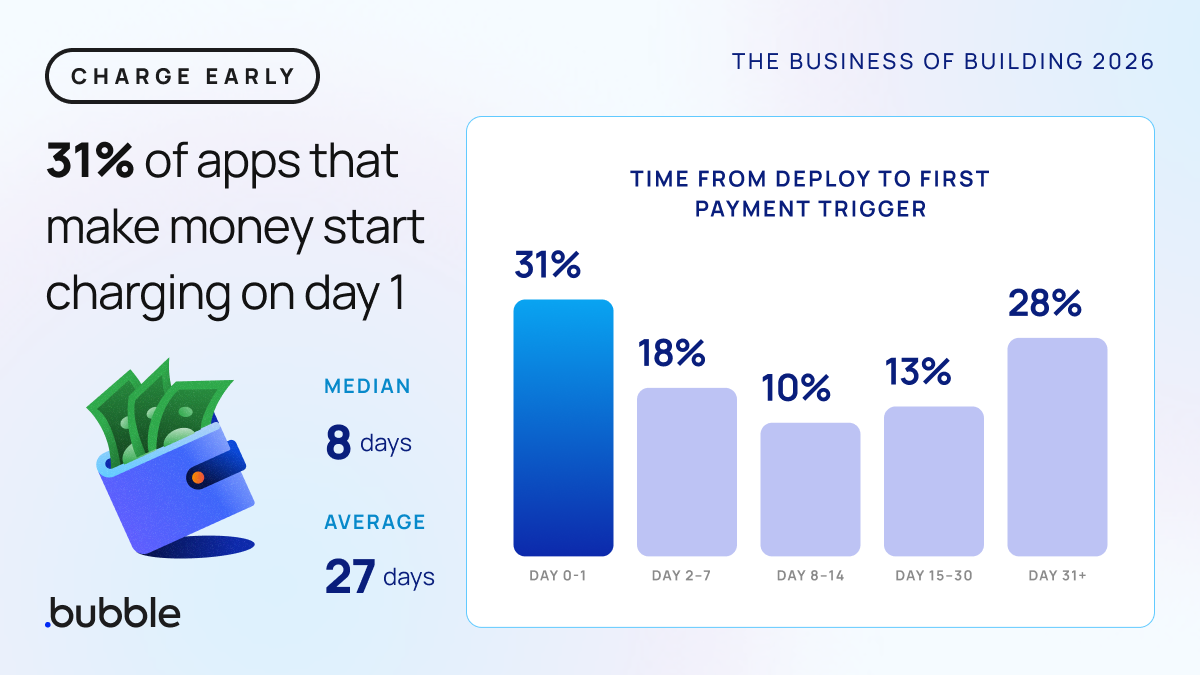
Apps that make money start charging within days
Almost a third of the apps that make money charge on the very first day, and the typical monetized app processes its first transaction within 8 days of going live. That timing is a deliberate choice, and quickly gives valuable user data, because the moment a builder puts a real price in front of a user, it tells them whether anyone will actually pay for their product. For these builders, the answer comes early because they’re monetizing early, and everything they build next rests on it.
Steady shipping and making money go together
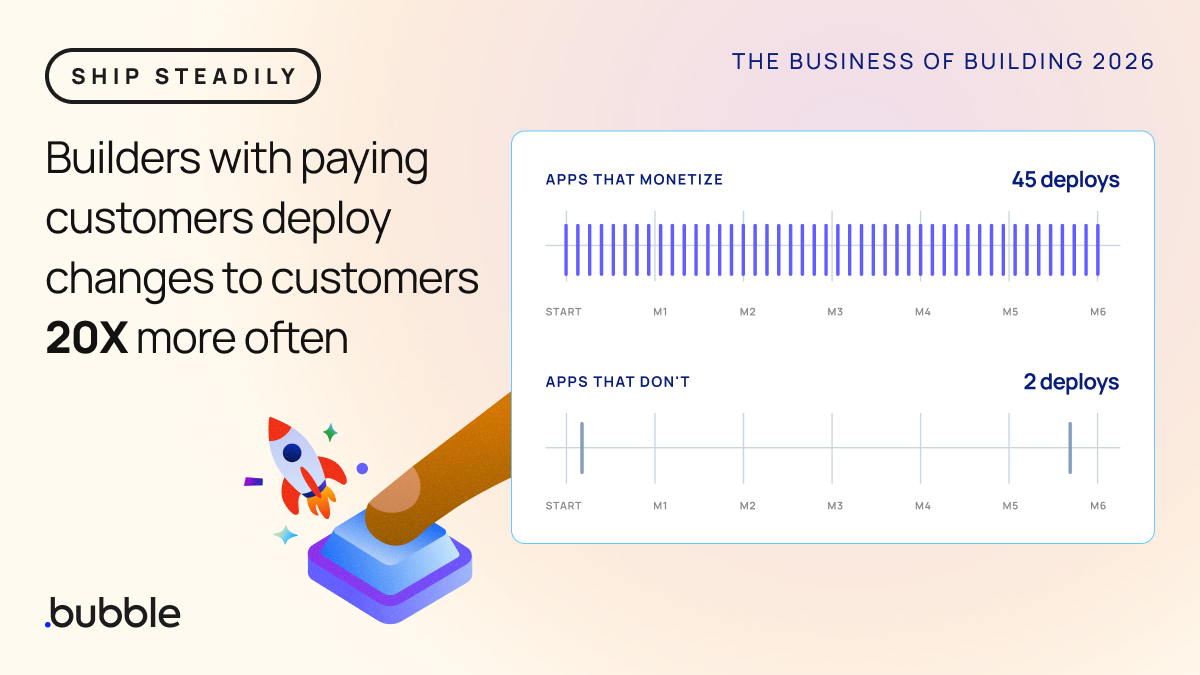
A typical app that makes money deploys about 45 updates in its first six months, while an app that doesn't only deploys two. Deploying roughly 20 times as often means launch isn’t treated as an endpoint, but rather an opportunity to keep iterating. Paying customers point out what is missing in ways no test can, and the builders who make money build each of those into the next release, then the one after that.
Apps that earn see months of ongoing edits
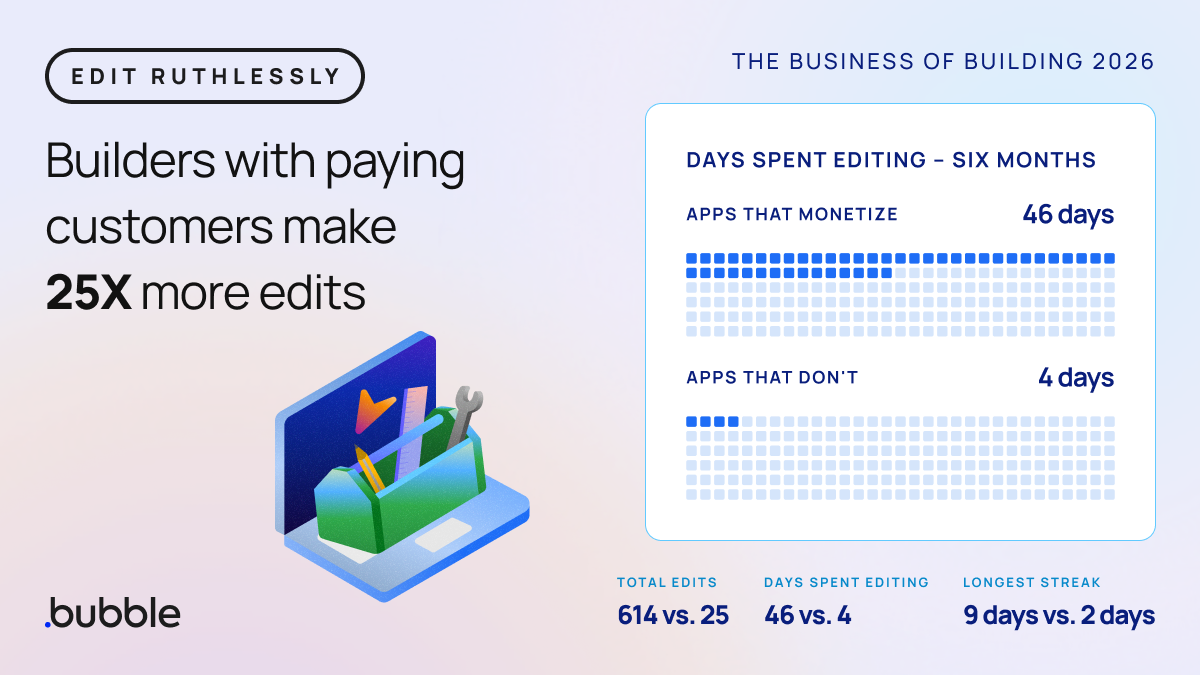
The apps that make money come from builders who keep returning to the same product, again and again, across months. In its first six months, the typical one is edited 614 times across 46 separate days, against 25 edits across 4 days for an app that doesn't.
That comes to about 25 times as many edits over roughly 12 times as many days, and the spread matters more than the volume as those 46 days aren't a burst of activity just around launch. Their longest unbroken run reaches 9 straight days of building, against 2 for everyone else.
Building boldly tracks with paying users
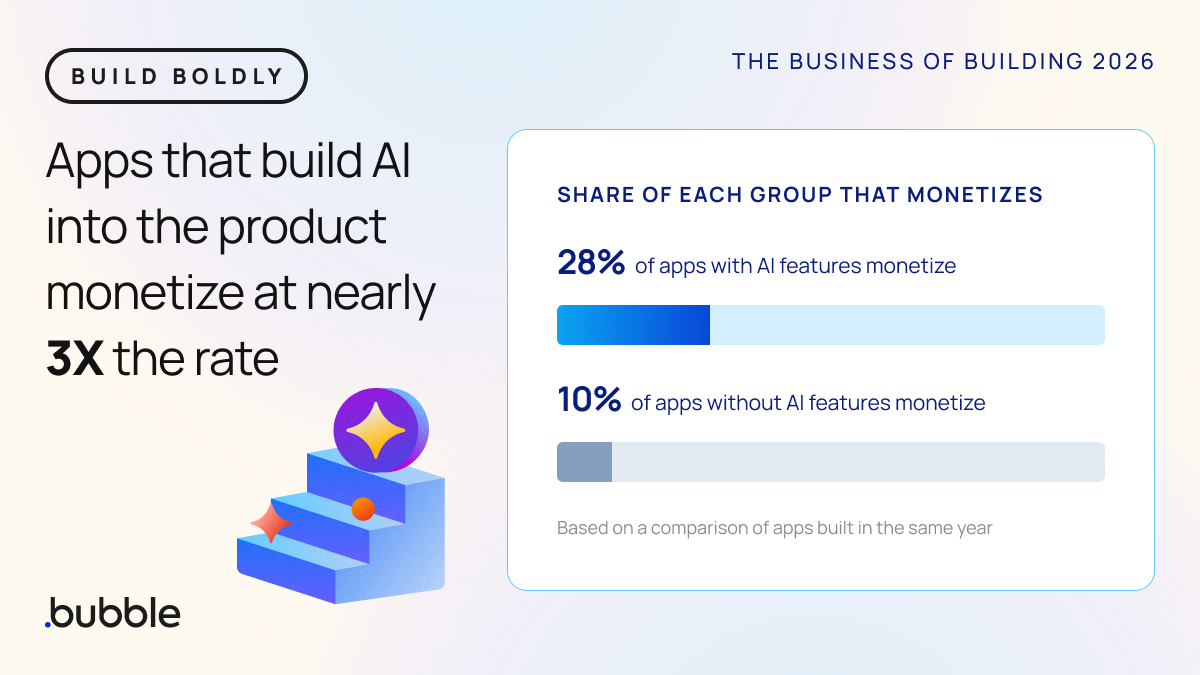
Adding AI features is one of the bolder moves a builder can make, and it shows up in the numbers. Among apps with AI features, 28% of them make money, against 10% of those without.
While this is a strong reason to build AI in, it also comes with trade-offs. Running these features gets more expensive as usage grows, and their output can vary from one run to the next. Builders add them anyway, because users are more willing to pay for apps that have them. The risk doesn't go away, but it gets smaller the better a builder understands what they've built.
About the data
These findings come from observed behavior rather than a survey. We looked at how more than 250,000 live and deployed Bubble apps were built and run, with each app measured across its first six months from launch. Because the data records real deploys, edits, and payment activity, it captures how apps behave across months, not a single snapshot or a self-report.
Detailed methodology can be found in the report.
Being the fastest isn't what makes a business
Speed is the easiest thing to talk about, because it's the easiest thing to achieve. Launching a working app takes mere days, so that no longer tells you much on its own. Plenty goes into whether an app becomes a lasting business, much of it particular to the app, the market, and the person building it.
But across the apps that made money, charging early, shipping steadily, editing across months, and building in features customers asked for are four patterns that showed up. What they share overall is persistence as these builders kept working long after the launch.
None of that is possible if you can't read and change what you made. Iterating for months means going back into the product week after week to fix what's broken and build what's next. You can only do that if you understand how your app works. When it's built from generated code you can't follow, you're stuck waiting on someone who can, and that's often where a promising app might stall for good.
Start building on Bubble for free and stay in control of what you make. Prompt with AI when you want speed, then edit visually when you want precision, so you can keep improving your app for as long as it takes to turn it into a business.
Read the full Business of Building 2026 report to see all four findings in detail, the full methodology, and what else the data shows about who's building, what they're making, and our predictions for where the business of building is going next.
Build for as long as you want on the Free plan. Only upgrade when you're ready to launch.
Join Bubble