At many enterprise-level companies, product managers play a key role in understanding customer needs and translating them into solutions that both help the customer and grow the business. But when Michael Ong joined Seagate as one of two product managers on the Lyve team, he didn’t join as just any enterprise product manager — he also joined as an experienced Bubble Developer.
After he was hired, Michael saw an opportunity to streamline operations by building a suite of internal tools using Bubble. The project was so successful that Seagate decided to rebuild a major customer-facing subscription hub on Bubble — something that had taken a traditional development team more than three years to develop initially.
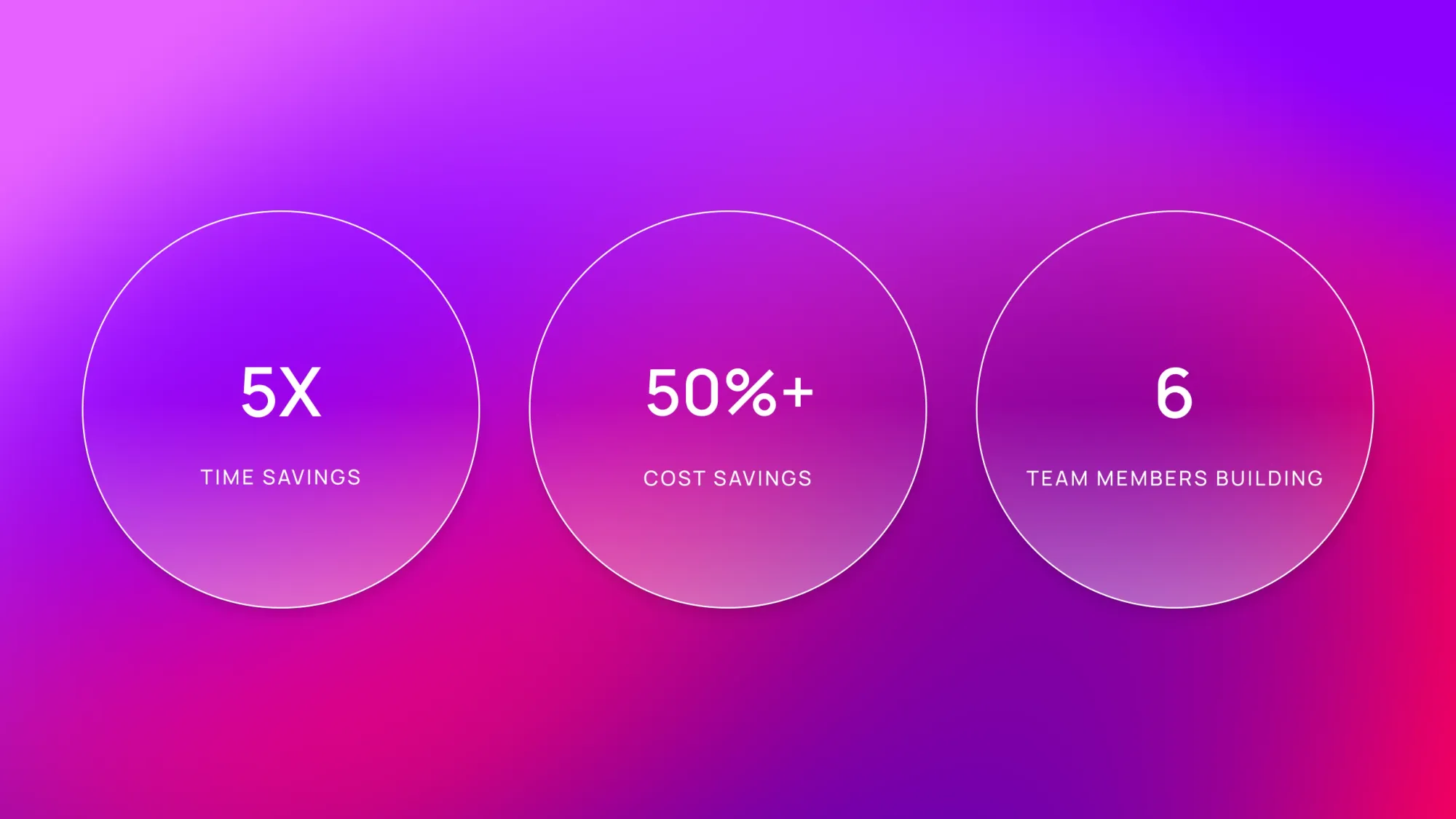
With Bubble, Seagate will finish the rebuild project in about four and a half months — all while demonstrating that Bubble is not only capable of supporting customer-facing enterprise solutions, but also faster, less expensive, and just as secure, scalable, and integrable as traditional software development methods.
Proving security, speed, and flexibility through Lyve’s Admin Console
Michael has been using Bubble since 2013 — just a year after Bubble officially launched. “I love the platform,” he says.
He recognized that there were serious business upsides to building Lyve’s Admin Console — an internal hub that contains a suite of 11 different micro-apps — on Bubble. Because Seagate manages everything from order fulfillment to controls in other Seagate ecosystem apps through the Admin Console, it was critical that the hub be flexible, secure, and easy to update.
Michael’s team built and launched the first version of Lyve’s Admin Console in only two months on Bubble. “We had good success,” he recalls. But there was still more untapped potential.
Building customer-facing, enterprise solutions on Bubble
After the Admin Console project, Seagate wanted to use Bubble for their next big push: the customer-facing Lyve Management Portal. A traditional development team took more than three years to build the integration-heavy portal, but “cost and time constraints were a problem for us,” says Michael. They needed to rebuild — on Bubble.
As a first step, Bubble had to go through an information security review (ISR) to ensure the platform met Seagate’s rigorous security standards. Because Bubble is SOC 2 Type II compliant, Bubble passed the ISR with no issues. And so the Lyve team started building.
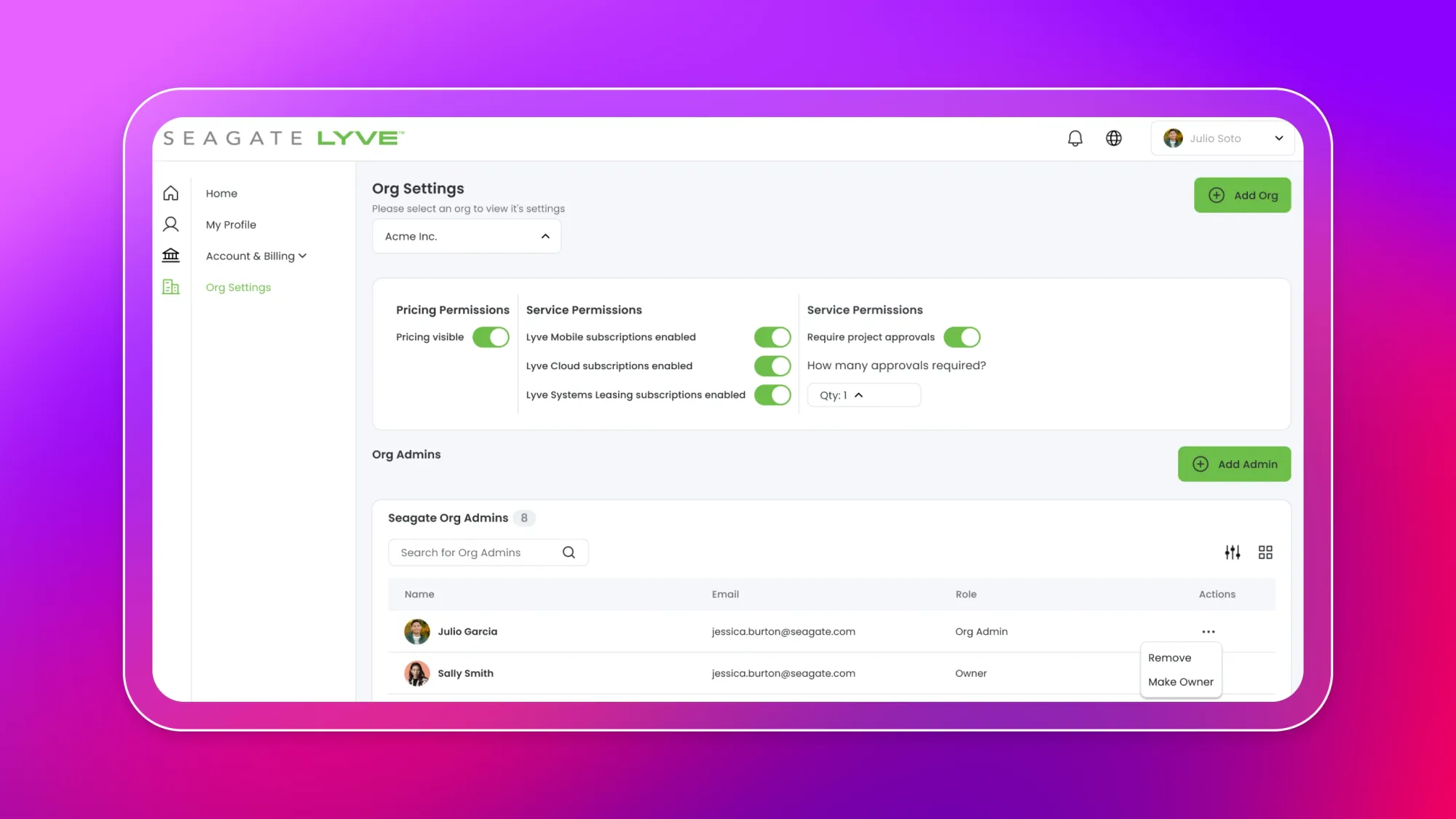
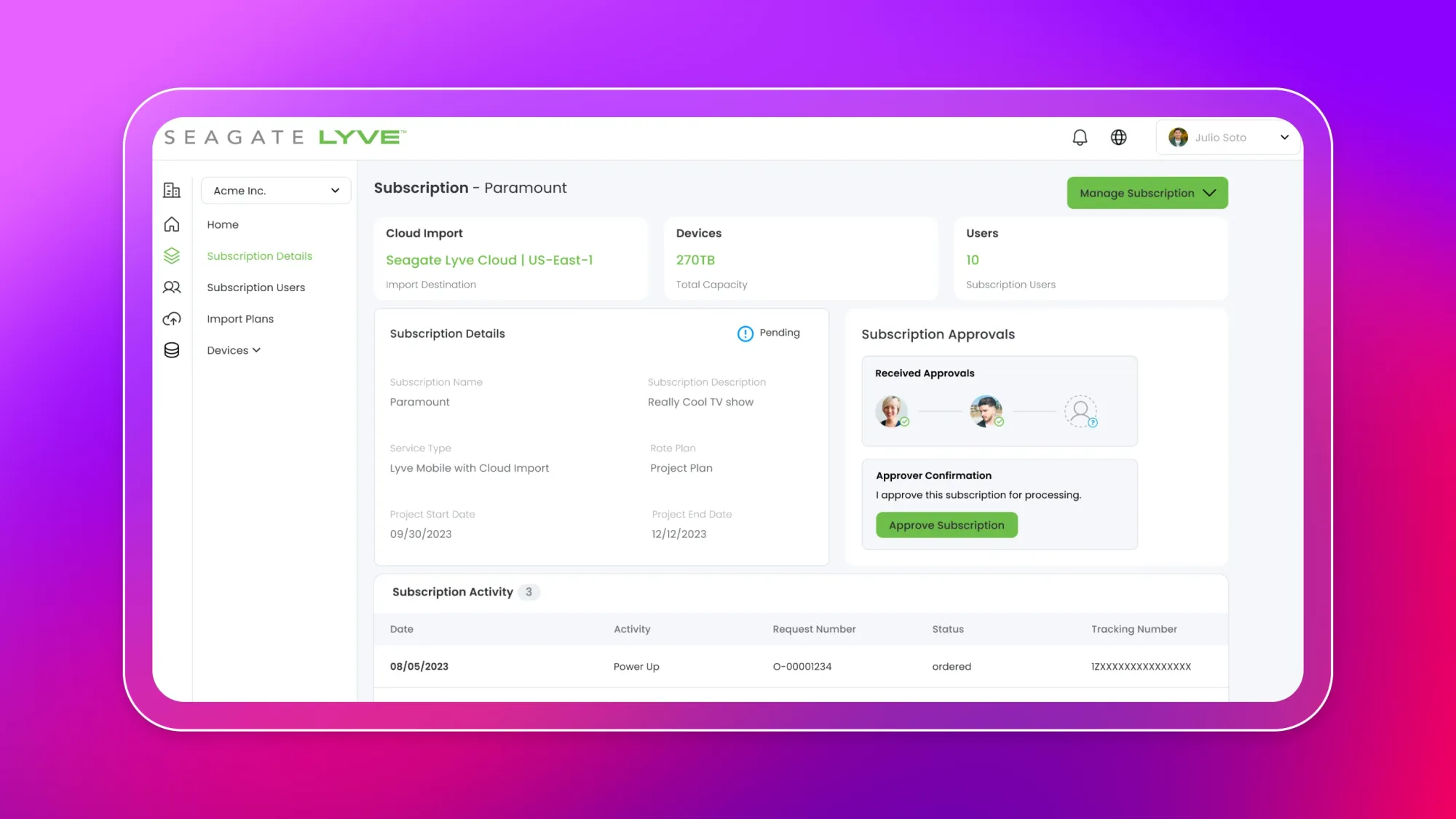
From the Lyve Management Portal, Seagate customers can manage their subscriptions for Lyve Mobile, Lyve Cloud, and other Lyve services. “We have an ecosystem of native desktop, command-line interface (Live Client CLI), and web applications that all integrate, communicate, and work together to enable us to provide our services to our customers,” explains Michael.
For example, from the Bubble-powered portal, Seagate customers can place a device order, invite others to that subscription, and grant remote access to that device via tokenized authentication. The tool even integrates with internal and external systems like Salesforce, Zuora, and SAP through API connectors and workflows.
“It’s a testament to Bubble that a very small team was able to displace a large group of outsourced third-party contractors — even with folks that [had] zero experience in Bubble,” says Michael.
“It’s a testament to Bubble that a very small team was able to displace a large group of outsourced third-party contractors.”
That small team? Just six people — all of whom do other jobs besides building as well.
Relying on no-code to stay quick, nimble, and innovative
While Seagate is still putting the finishing touches on the Lyve Management Portal at the time of this writing, the team expects to complete the project start-to-finish in just six months — a full two and a half years faster than that traditional tech team.
After that, the sky’s the limit. “Even when you're using no-code, development never ends, so you're constantly adding new features, making changes, and trying to expand the business. Bubble makes us really nimble when it comes to the changes that we need to make.”
The team will prioritize mobile initiatives after the web piece of the Lyve Management Portal is complete, leveraging Bubble’s forthcoming native app-building functionality to support the effort. Michael and the Seagate team also plan to use Bubble for several other apps.
“Things that take us weeks to do using traditional development we can do in days with Bubble,” Michael emphasizes. “By using the Bubble platform, we can maintain a level of agility that we previously couldn’t have achieved. This gives us a strategic advantage and has downstream impacts that directly affect our customers in a positive way.”
Build your app on Bubble's Free plan. No need to upgrade until you're ready to launch your app.
Join building