
In the AI industry, a year might as well be a decade. When long-time co-founders Nadav Boaz and Robby Frank saw the opportunity to combine voice-cloning technology with ringless voicemails, they knew there was no time for traditional development cycles. “I have friends who’ve been building products for over a year, and I tell them ‘you don’t have a year,’” says Nadav. “You have once-in-a-decade new technology appear every month.”
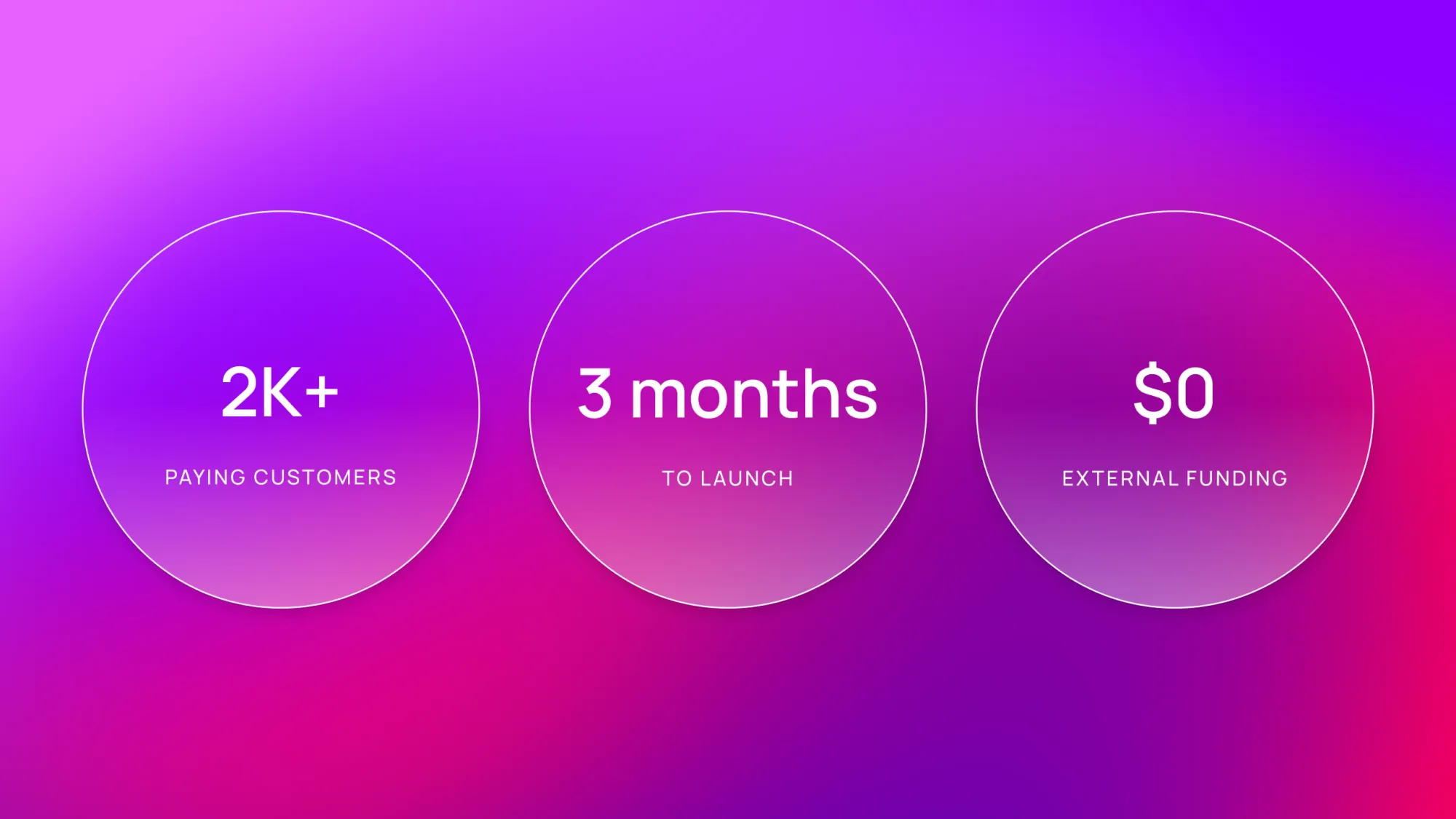
The partners chose to build on Bubble and moved fast. The result: VoiceDrop, an AI-powered ringless voicemail platform that hit a 7-figure ARR in just 12 months with more than 2,000 paying customers across major industries. And it’s all built entirely on Bubble without a single line of code or dollar of outside funding.

Finding the opportunity at the intersection of AI and voice
Nadav knew ringless voicemails from his real estate days. As a former real estate company owner, he’d used the technology extensively to generate leads, sending voicemails directly to prospects’ inboxes without their phones ever ringing. When the AI boom hit in early 2023, he immediately saw the opportunity to combine voice-cloning technology with this proven outreach method. And he knew he needed to move fast.
“Using visual development just allowed us to build everything so much faster."
Nadav and Robby had already proven they could move quickly with Bubble. In early 2023, they’d built their first AI SaaS product — Articly.ai, an automated article creation tool — entirely on the platform in a single weekend, then improved it over a few weeks. That product generated $12,000 in monthly recurring revenue within two months, attracting over 500 clients with zero marketing budget.
The speed and validation were intoxicating. “Using visual development just allowed us to build everything so much faster,” Nadav says. When it came time to build VoiceDrop, there was never a question about which platform they’d use.
From prototype to product — fast
VoiceDrop launched in February 2024 after less than three months of development. The platform solves a stark problem: The average cold caller only connects with about 2% of people they reach out to. Out of 100 calls, maybe five people answer. Of those five, maybe two actually stay on the line for a relevant conversation.
With VoiceDrop, sales teams send AI-generated ringless voicemails instead. Users speak for 20 seconds to clone their voice, write a script with variables pulled from prospect data, and set up automated campaigns. Interested prospects call back, and suddenly callers are spending 100% of their time in actual conversations instead of listening to phones ringing.
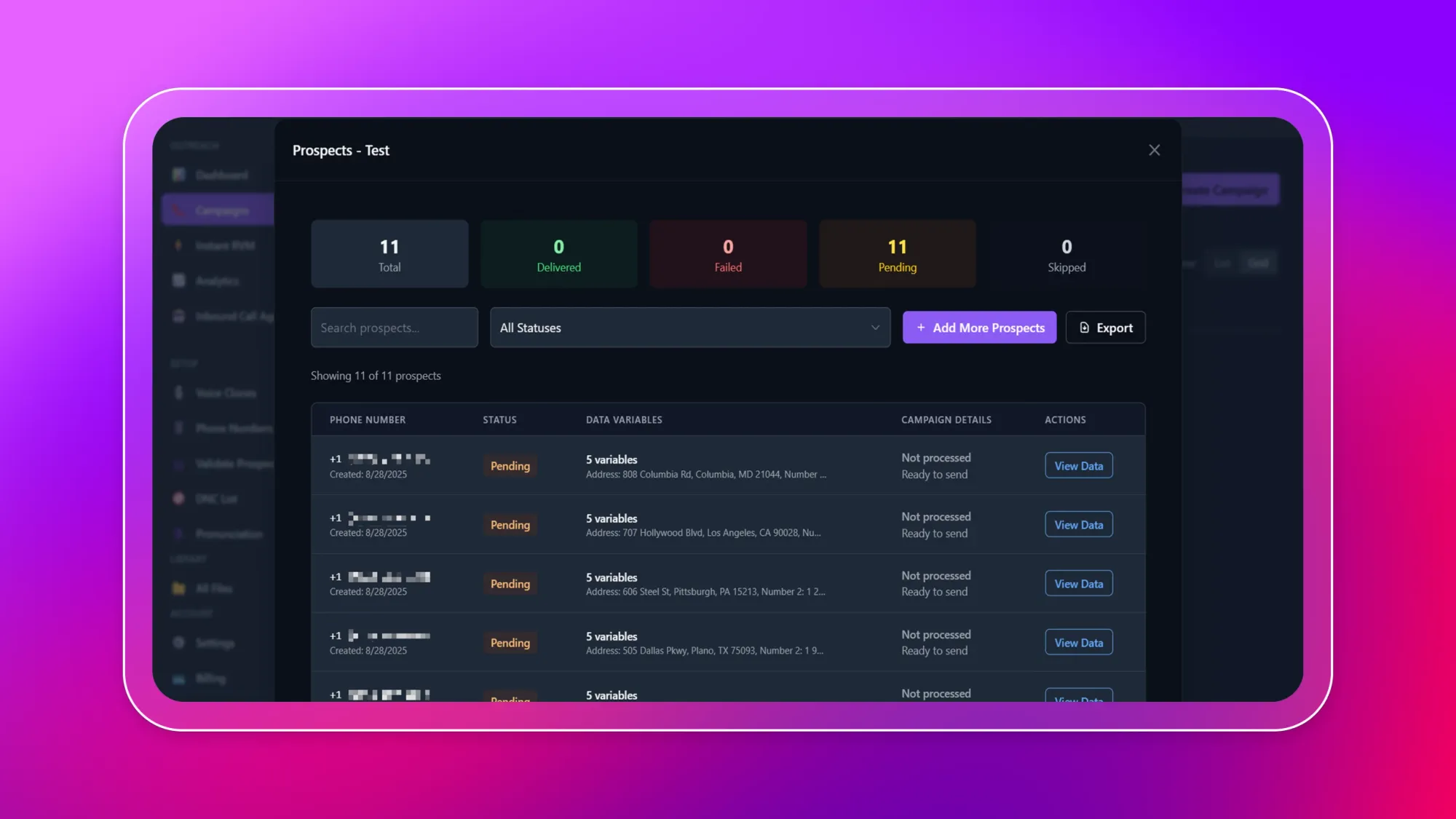
VoiceDrop’s feature list also includes AI agents that can answer inbound calls, qualify leads, and push information directly into a client’s CRM — without any human involvement. This is where VoiceDrop’s innovation really shines: The AI agents don’t just match human performance. They beat it.
“Our AI agent usually has shorter calls that provide better results on average,” Nadav says. The agents are assertive and focused on specific qualification questions — asking about bedrooms and bathrooms for real estate, loan type and collateral for finance. They don’t accept evasive answers and don’t get sidetracked. They also don’t run into the challenges with cultural context and language barriers that many offshore call center teams face.
“Most people don’t realize they’re speaking with an AI,” Nadav says. “They receive a personalized, AI-generated voicemail using a near-perfect clone of your voice. Then, when they call back, that same voice answers.” He adds that the system’s low latency, realistic background sounds, and subtle human-like reactions — like emotion and breathing — often cross the uncanny valley, making people genuinely believe they’re talking to a real person.
VoiceDrop serves customers across finance, real estate, healthcare, and insurance. Finance clients use it to sell loans and handle collections. Real estate professionals use it for buying and selling properties. Healthcare providers send appointment notifications. And one of the largest insurance companies in the US uses VoiceDrop to alert clients about rate changes and policy updates.
Building with Bubble: Speed, scale, and hybrid architecture
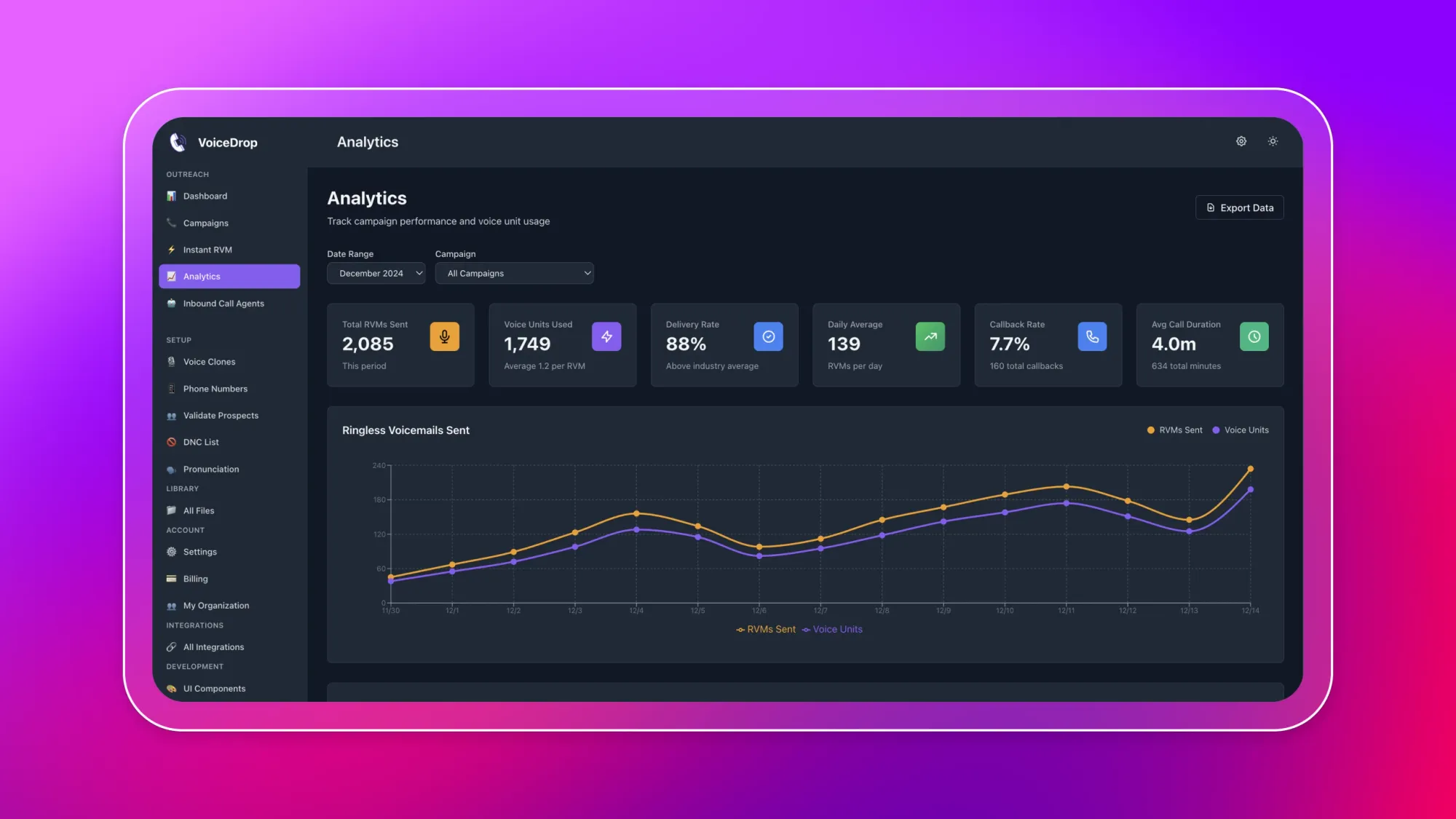
The team built VoiceDrop 100% on Bubble for the frontend, with AWS RDS, Lambda, and S3 powering the backend for scalability and performance. The platform handles tens of millions of AI-generated ringless voicemails each month with a 99.9% uptime, including intelligent throttling and compliance automation for high-volume enterprise campaigns.
The company now has five Bubble Developers on a team of 30 total employees. A critical part of their strategy: training existing Python developers to use Bubble rather than hiring specialized no-code developers. This combination of traditional coding knowledge with Bubble’s visual development platform creates developers who can think architecturally about complex systems while building them rapidly.
“I honestly believe that my team is in the top 0.1% of Bubble Developers in the world, in part because of their head start as actual developers,” Nadav says.
The path to seven figures without funding
VoiceDrop achieved a 7-figure ARR within 12 months of launch, entirely bootstrapped. The company now supports over 2,000 paying customers and maintains 24/7 AI operations.
The speed-to-market advantage translated directly into competitive advantage. While competitors spent years in development, VoiceDrop was immediately iterating based on real customer feedback. Without expensive custom development, VoiceDrop could validate product-market fit quickly, iterate, and reinvest revenue into growth rather than paying down technical debt. Every dollar saved on development became a dollar spent on capturing market share.
The momentum hasn’t slowed. The team is substantially improving their AI agent capabilities, adding multi-step campaigns with A/B testing functionality, and has already built a Shopify app for e-commerce cart recovery. “If someone abandoned their cart, they get a personalized voicemail from the CEO with a special promotion and a unique code,” Nadav says. “There’s nothing like that. No one is doing that.”
For Nadav, the lesson is clear: In fast-moving markets like AI, the ability to build and iterate quickly isn’t just an advantage — it’s everything. Traditional development timelines meant missing the window entirely. Bubble gave him the speed to capture it.
“In the early days, I saved 80-90% of the development time and money,” Nadav says. “Today, as everything is streamlined, we’re saving around 40-50%. That’s the difference between building a business and watching someone else build it first.”
Build for as long as you want on the Free plan. Only upgrade when you're ready to launch.
Join Bubble