
It’s a problem lots of people in the working world can relate to: being tasked with finding a software solution that will actually meet your organization’s needs. For Taylor Bennie, the head of Bachelor of Medicine, Bachelor of Surgery (MBBS) digital education at University College London Medical School (UCLMS), he’d had just about enough with the search — until he found Bubble.
With a bit of coding experience, Taylor assessed the problem he was trying to solve and got to work building a custom tool, which started as a medical school tutoring platform and matured into a full medical school curriculum map with sophisticated role-based access controls (RBAC) and licensing opportunities with other universities around the globe. Throughout, Bubble has proven itself an even more worthwhile and lucrative investment than they expected.
From never coding to no-code
After Taylor’s medical school department decided it was time to move on from their dated Microsoft Access system — ”we needed something web-based” — Taylor was tasked with finding their next option. Except it wasn’t so easy.

“We looked at off-the-shelf products and nothing met the requirements because medical education is so different to all other forms of education.” But traditional software development rates proved prohibitively expensive. “They were asking for hundreds of thousands of pounds… medical schools can’t easily afford that.” Eventually, Taylor and the team began looking at no-code options. After exploring Bubble in free trial mode, he quickly realized they were onto something.
Taylor had never coded software, but he didn’t let the challenge intimidate him. “I was an instructional designer, so I had access to databases in the past,” Taylor tells us. “But I’ve just got a general kind of skillset, none of it was development. I know I needed something easy that took all the code out of the process.”
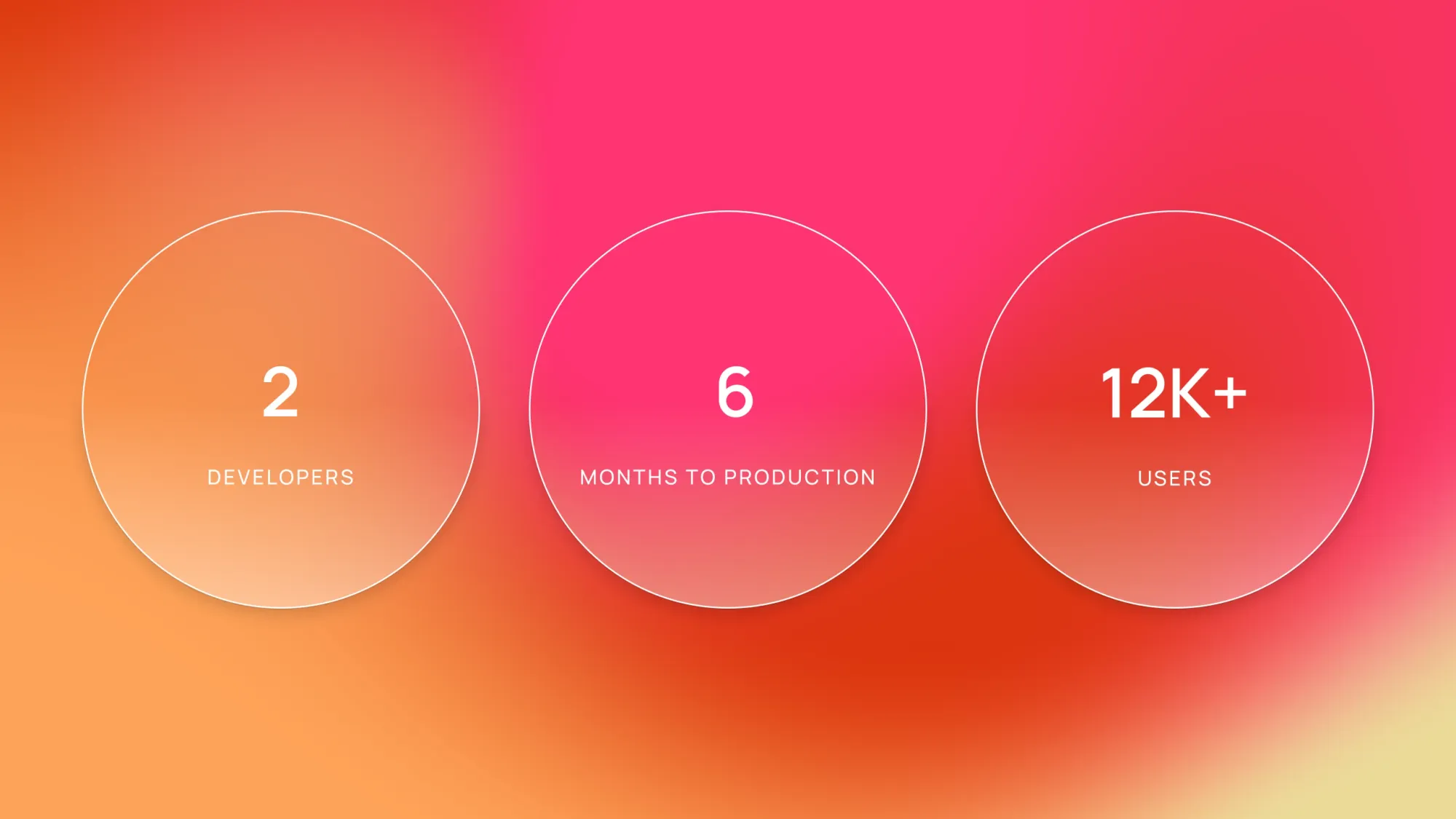
At the time, Taylor was just a one-person show with other department responsibilities — but it still only took him six months to learn Bubble and get the first production-worthy app in the hands of students and external users. From there, things only grew. Today, Taylor has one additional Bubble Developer on staff who supports the app with routine maintenance and feature development. “By building and doing things, we were able to learn. Once you’ve got it, you can do so much with it.”
“By building and doing things, we were able to learn. Once you’ve got it, you can do so much with it.”
A uniquely collaborative process
“The first thing we built was a personal tutoring app,” Taylor explains. “So we could assign students a tutor, or take one tutor and assign them multiple students. Students could see the notes, and the tutor could write the notes and have that dialogue.” After that launched, Taylor’s next area of focus was building out an app to manage student records. Finally, he turned to the UCL Medical School Curriculum Map app, which has 12,000 users and is the main product his team supports today.
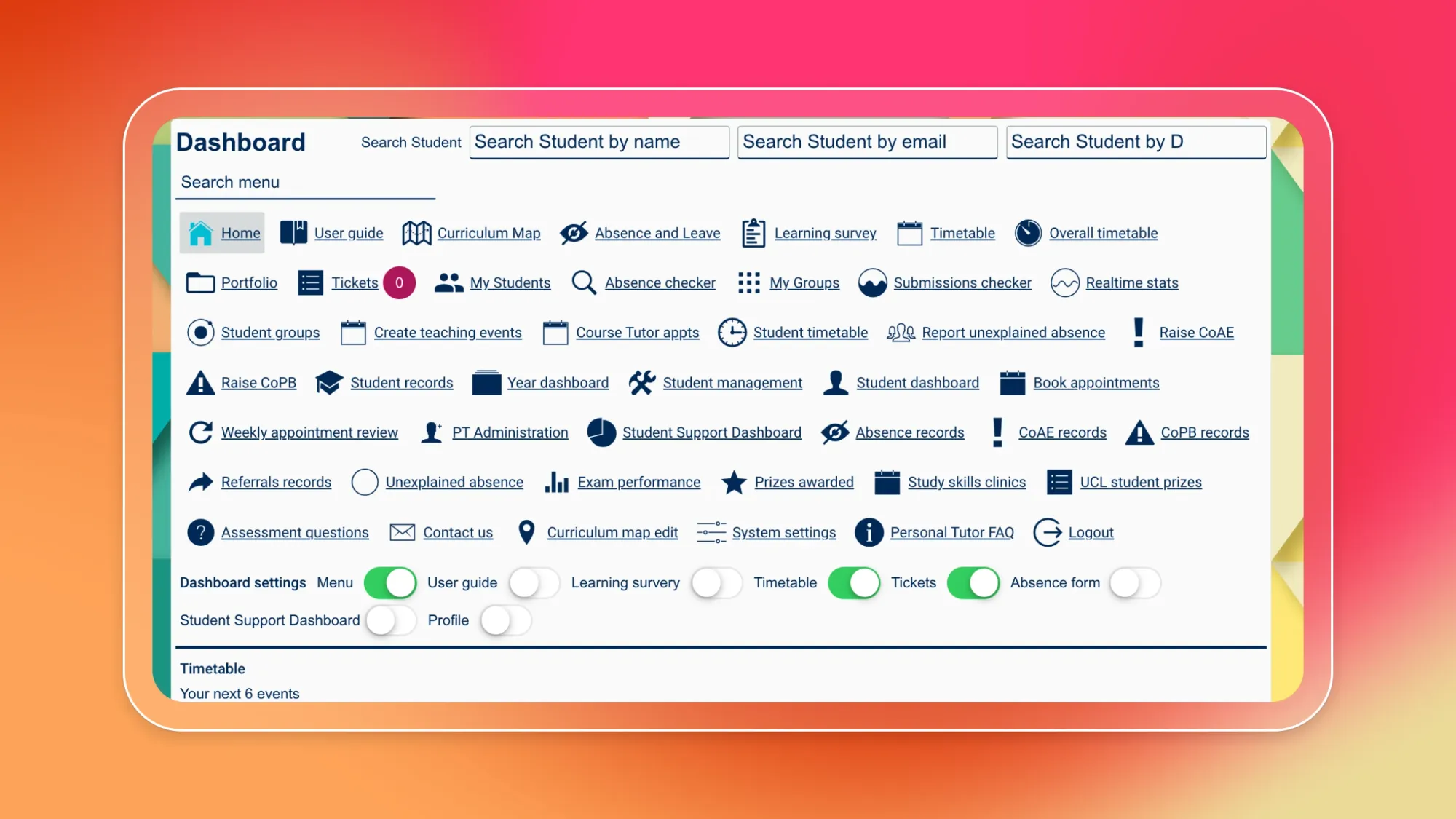
“Bubble has allowed us to do so much that we couldn’t do before. And the speed – what would have taken years before now takes us a week or a month, even a day.” Plus, he notes, Bubble’s version control features make hot fixes very manageable.
“Bubble has allowed us to do so much that we couldn’t do before. And the speed – what would have taken years before now takes us a week or a month, even a day.”
Taylor credits an intentionally collaborative development and design approach as one of the reasons the Curriculum Map has been so successful. “We built it in collaboration with students. They were our customers. We set up working groups with all our students and said, ‘Great, how do you want it work?’” Because it’s so simple to modify user flow and functionality on Bubble, Taylor could set up regular student sessions and collect feedback, share designs, and test interactions and overall app experience. If something needed to change, Taylor could implement and deploy it easily, quickly, and securely — even with a non-technical background.
Fast forward to today, and this unique end-user feedback loop (among universities, at least) is alive and well. “We’re continuing to add features based on what the students want.”
Integrations and plugins have also helped knit together a robust system. “Every student here has a Microsoft 365 account, so we’ve integrated that.” This specific integration makes syncing student timetables and events a breeze. Additionally, Taylor says integrations with Sendgrid, Spark Forms, Google Analytics, and several APIs have strengthened the overall experience and ability to fetch and relay data.
Bonus: A surprise revenue-driver
UCL Medical School’s Curriculum Map app has been so successful that others are taking notice. Not only have other departments at UCL expressed interest in building their own Bubble apps, other universities around the globe have caught wind of Taylor’s product and the value it provides: “We actually resell the Curriculum Map as software as a service with customizations.”
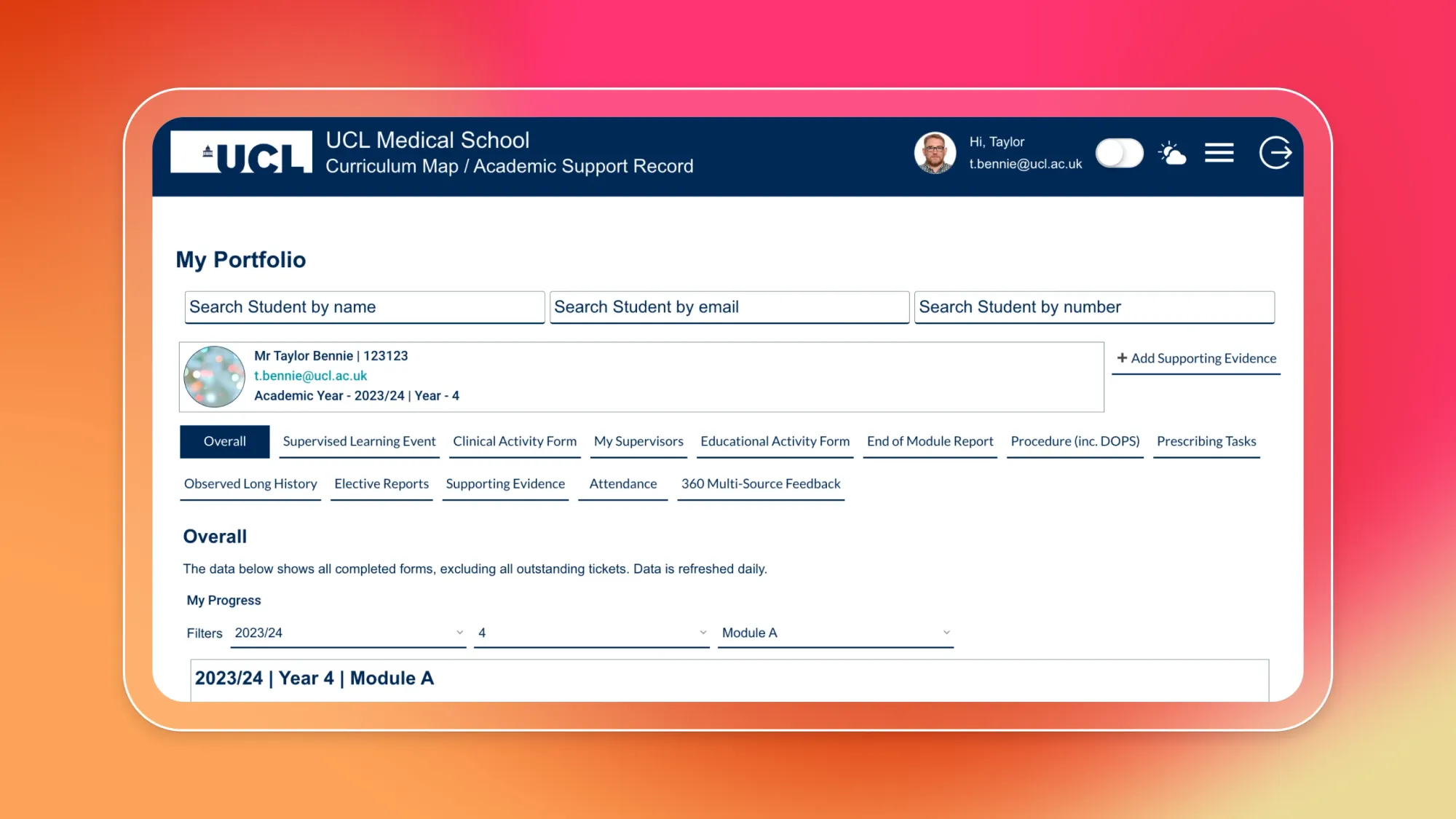
With higher education institutions from the United Kingdom, Middle East, Asia, and the United States knocking on Taylor’s door, it’s clear that what once started as a project born out of necessity has bloomed into a new source of revenue for UCL’s Medical School.
As UCL Medical School looks toward the future, Taylor is optimistic and excited about building and evolving their technology solutions through Bubble even more. “It’s a game-changer for us.”
Build for as long as you want on the Free plan. Only upgrade when you're ready to launch.
Join Bubble