TL;DR: Converting a website to a mobile app means choosing a wrapper, PWA, or native build, trading speed and cost against device access, polish, and app store rejection risk. Either way, redesign for touch and expect store reviews for major updates.
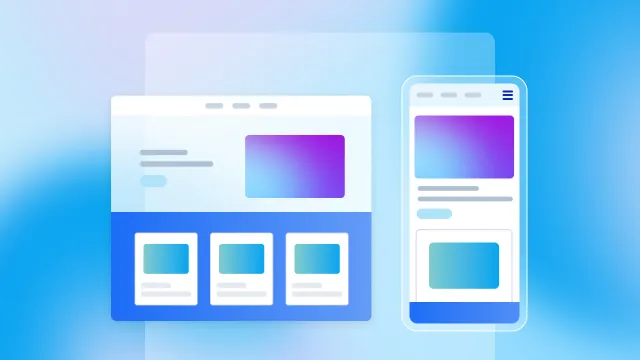
Shrinking your website to fit a smaller screen isn’t the same as building a mobile app. Websites and mobile apps are built for different experiences: Websites center browsers and mouse clicks, while mobile apps need to prioritize touch, gestures, and completely different user behavior.
What you’re starting with matters too. A marketing site is a much smaller lift than a full web app with logins and a database.
You’ll decide whether mobile is right for your product, compare wrappers, progressive web apps (PWAs), and native apps, and estimate costs and app store fees. Then you’ll sort out what you can reuse from your web app, redesign your screens for touch, test on a device, publish to the App Store and Google Play Store, and ship updates after launch. If you’re building on Bubble, you’ll also see how to build a native iOS or Android app in the same project as your web app.
What “converting a website to a mobile app” actually means
To convert a website to a mobile app, you choose one of three paths: wrap your existing site in a native app shell, turn it into an installable progressive web app (PWA), or rebuild the interface as a native iOS or Android app. Wrappers are the fastest but the most likely to be rejected from the app stores, while native apps take more work and give users direct access to the camera, location, and push notifications. Either way, it’s different from making your website mobile-responsive, which only adapts the layout for smaller screens while the site keeps running in a browser.
A mobile app lives on the user’s device and offers direct access to hardware features like the camera, location, and push notifications. Which conversion path makes sense depends on what you have and what you need from the app.
When people talk about “turning a website into an app,” they usually mean one of four things:
- Home screen shortcut: iOS and Android both let you save a website to your home screen. Tapping your icon just opens the site in a browser. There’s no download, no App Store listing, and no access to native device features.
- Web wrapper: Your existing site packaged inside a native app shell so it can be listed in the App Store and Google Play Store. It still loads your website in an embedded browser window, so it looks and behaves much like the site.
- Progressive web app (PWA): A web app you can install, with limited offline support if it’s built for it. It still runs on web technology under the hood, though.
- Native app: Built specifically for iOS or Android, downloaded from the App Store or Google Play Store, with direct access to device features like push notifications and the camera.
Which one you need also depends on what you’re starting with:
- Static website: A marketing site or portfolio that’s mostly for reading and browsing. Converting one is usually a light lift.
- Web app: A product with a database and functionality people actually interact with, like user accounts. Converting one means building out a full native experience.
Should you convert your project to a mobile app?
Yes, if your users would benefit from camera access, location, or push notifications, or if being in the app stores would put you in front of people who can’t find you now. The trade-off is the added cost of redesigning for mobile and keeping up with app store reviews.
You get those device benefits whether you mirror what you already have or build something new. PWAs and web apps can approximate some of that access, just with more limits. Push notifications and camera access in particular are more restricted outside a native app, especially on iOS.
The cost isn’t just the redesign, either. Testing across devices takes time up front, and for native apps, major changes mean a new build and another review instead of a quick push live.
Before you commit, work through three checks:
- Check whether mobile solves a specific problem for your users: Apps built around photo capture, location, or daily habits get the most out of mobile. Create With Conference used Bubble to ship an event app that kept attendees updated in one place.
- Look at whether people already use your site on their phones: Pull up your analytics and see how much mobile traffic you’re getting. A large share of phone visitors is a sign that an app would meet people where they already are.
- Decide whether people will download the app and keep it around: Downloading an app and giving up phone storage takes a good reason. Even big productivity names like Slack, Notion, and Trello lean on mobile-specific features like push notifications and offline access to make that worth it.
Once you’ve decided to go mobile, you’ll also need to decide whether to mirror your existing functionality or build something new.
Mirror your web app or build something new?
Mirror your web app if your mobile users need the same core functionality, just on the go. Take a customer support tool: People need to look up tickets and reply to customers, whether they’re on a laptop or a phone.
Build something new if they need something different, whether that’s less or more. For instance, if you have a project management tool, most people just want alerts and quick updates on their phone, without the full desktop dashboard. If you have an expense-tracking app, people want to snap a photo of a receipt on the go, so you’ll need the camera.
On Bubble, both approaches start from the same shared backend, so you’ll build a new frontend and often some new workflows for mobile-specific features while your core data and business logic stay as they are.
Wrappers, PWAs, and native apps compared
You have three main options for getting your app onto phones: wrap your existing web app, build a progressive web app (PWA), or build a native mobile app. Each comes with different trade-offs in time, cost, user experience, and functionality.
| Wrapper | PWA | Native app | |
|---|---|---|---|
| How it works | Your website loads in a webview inside a native app shell | An installable web app that runs on web technology | Built specifically for iOS or Android |
| Effort | Fastest, often set up in days | Middle ground | The most work |
| App store listing | ✅ | Installed from the browser | ✅ |
| Device features | Limited, usually through plugins or third-party tools | More restricted, especially on iOS | Direct access to the camera, location, and push notifications |
| Offline support | Limited | Possible with service workers and caching, but varies by browser and platform | Depends on the platform and how the app is built |
| App store rejection risk | Higher, especially with no native features | Doesn’t go through app store review | Lower when it follows platform guidelines |
| Best for | Simple, informational apps, quick MVPs, and internal tools | Installable web experiences without an app store listing | Full mobile functionality, high usage, and a polished experience |
Option 1: Wrappers and PWAs
Web wrappers take your existing website and package it inside a native mobile shell so it can go in the app stores. Underneath, it’s still running web-based code. A webview is what makes this work: essentially a browser window embedded inside an app shell, loading your website as if someone were visiting it in Safari or Chrome.
There’s no way to simply “export” a website file as an app. Most website-to-app services create webview-style wrappers like this, and wrapping is also the quickest option if you have a hand-coded HTML site.
Progressive web apps (PWAs) are a middle-ground approach: web apps with some native-like features. You can install them, and some can work offline if they’re built with service workers and caching, but that support varies by browser and platform. Don’t count on offline working automatically.
Pros and cons of wrappers and PWAs
| Pros | Cons |
|---|---|
| ✅ Fast to set up | ❌ Slower and laggier than a native app |
| ✅ Cheap and quick to build | ❌ Feels more like a website than an app |
| ✅ Reuses the website you already built | ❌ Limited access to the camera, location, and offline features, which usually needs plugins or third-party tools |
| ✅ Updates whenever your website does | ❌ Interactions feel clunky on mobile |
| ❌ Apple or Google might reject it if it doesn’t feel app-like enough | |
| ❌ Harder to debug |
Why wrappers sometimes get rejected by Apple and Google
Apple’s App Review Guidelines are clear: Your app needs to feel complete and native, unlike a website in a box. If your wrapper is just a webview loading your site with no native features, expect a rejection for lacking minimum functionality.
That’s guideline 4.2, and it specifically targets apps that are “not useful, unique, or ‘app-like.’” If all you’re offering is what someone could already get from Safari, you’re in that bucket.
The Google Play Store holds apps to similar standards, though it’s usually not as strict about enforcing them. Native apps sidestep this problem, since they tap into the device’s hardware directly and follow the design patterns people expect.
Option 2: Native mobile apps
Native mobile apps are built specifically for iOS and Android. They integrate directly with device hardware to give users access to native features and responsive interactions.
There’s more than one way to build one. Developers can write platform code in Swift (for iOS) and Kotlin (for Android), use a cross-platform framework like React Native or Flutter so one codebase serves both, or use a visual app builder that produces native apps without code. If you’re considering Bubble, the how-to section below covers what building native looks like there.
When to choose a wrapper and when to go native
Wrappers work well for internal tools, quick MVPs, and simple utilities where speed is the priority. The more complex your app becomes, and the more users you expect, the stronger the case for native.
Choose wrappers if:
- Your app is simple and mostly informational. If users are primarily reading or browsing rather than interacting with live data, a wrapper can get you into app stores without a full rebuild.
- You need to move fast with limited resources. Wrappers can be set up in days, making them a reasonable choice when time or budget is the binding constraint.
- You want to validate demand before committing. A wrapper lets you test whether your audience actually wants a mobile version before investing in a native build.
Choose native mobile if:
- You want full mobile functionality. Native apps integrate directly with device hardware, so features like camera access, location services, and push notifications work the way users expect them to.
- Your mobile app will offer different functionality than your website. Native development gives you a separate canvas to design specifically for mobile use cases instead of squeezing a web experience onto a phone screen.
- You’re expecting high usage or a large user base. Native apps handle performance-intensive interactions better than wrappers, which matters when users are in your app daily or your audience is growing quickly.
- A polished experience matters for your brand. In industries where users compare you to established apps, a wrapper’s web-like feel can signal a lack of investment. Native design patterns build trust quickly.
- Users will spend significant time in the app. The longer users spend in an app, the more they notice the small frustrations of non-native interactions like laggy scrolling, misaligned navigation, and slow load times.
If you’re already building on Bubble, your database and backend logic carry over directly from your web app, which gives you a head start on native development.
How much does it cost to turn a web app into a mobile app?
Turning a web app into a mobile app can cost very little with a simple wrapper, while hiring traditional developers to build a native app from scratch typically requires a significant budget. On top of development, plan for app store fees and hidden costs like third-party services, analytics, and testing devices, which can add up quickly.
| App store | Developer fee | Other fees |
|---|---|---|
| Apple App Store | $99 per year | None listed here |
| Google Play Store | One-time $25 registration fee | A service fee on digital sales |
What it costs on Bubble
On Bubble, getting started is free. You can build and test your native mobile app on the Free plan using the Simulated device option in web preview, and you’ll need a paid plan when you’re ready to test on a real device with a dev build or publish to the app stores.
Bubble offers Mobile and Web & Mobile plans at the project level, so your web and native mobile apps share backend logic and infrastructure. Starter Mobile starts at $42 per month billed annually, and Starter Web & Mobile starts at $59 per month billed annually.
Every Bubble plan, including the Free plan, includes a monthly AI credit allowance, but you never depend on AI credits to build your app. Generating an app with the Bubble AI Agent doesn’t use AI credits, and working in the visual editor or Bubble MCP never does either.
If you run out of credits mid-request, the Agent stops and keeps the finished work. You can keep building by hand or buy more credits on a paid plan.
How to convert your website or web app to native mobile on Bubble
On Bubble, you build native iOS and Android apps without writing Swift or Kotlin. Bubble for native mobile apps puts your mobile app in the same project as your web app, and the whole thing is fully visual: the screens, plus the logic, data, and privacy rules behind them.
Bubble AI works alongside that editor. With native mobile app generation (beta), you describe your app to the Bubble AI Agent, and it builds the UI, data, logic, workflows, and integrations. Everything the Agent builds, you can read and change yourself.
Pros and cons of Bubble for native mobile apps
| Pros | Cons |
|---|---|
| ✅ Direct hardware access for faster, more responsive interactions | ❌ Takes more time than wrappers, though less than traditional coding |
| ✅ Apps feel familiar because they use standard iPhone and Android design patterns | ❌ Costs more than a simple wrapper, though web and native mobile apps share backend logic and infrastructure in one project, which cuts duplicated work |
| ✅ Built-in Bubble security tools, plus standard App Store and Google Play Store review workflows during publishing | ❌ Learning curve for mobile design patterns |
| ✅ Supports offline read-only access for supported use cases | |
| ✅ Camera, location, push notifications, and native gestures | |
| ✅ Build with Bubble’s visual editor | |
| ✅ Shared database, backend workflows, and APIs with your web app | |
| ✅ Deploy to both iOS and Android |
Converting to native mobile isn’t a copy-paste job. It means designing for touch from the ground up.
As Lorène puts it: “Mobile development forces you to focus on what really matters and to prioritize accessibility. Screen space is limited, and users interact with their phones in dynamic ways — they rotate them, tap everywhere, swipe constantly, and expect immediate responses. The key with mobile is to keep things minimal, intuitive, and high-performing.”
Existing Bubble users: You’ve got a solid head start here. Web and native mobile apps share the same Bubble backend, including the database, privacy rules, user authentication, API connections, and workflow logic.
To turn a web page into a mobile app, you’ll rebuild it with mobile-specific components. The Agent can help: Show it a screenshot of your web page, and it will build a mobile-first version to match.
Your backend already does the heavy lifting, so most of the work is redesigning the interface.
If your current site or web app isn’t built on Bubble, you have two paths:
- Recreate your core functionality on Bubble: Build the mobile version with a shared backend, so web and mobile live in the same project. This is the smoothest experience.
- Build only the mobile app on Bubble: Connect it to your existing backend through APIs, and keep your current web app where it is.
If you don’t have an existing site or app at all, you can skip both paths above and design with mobile in mind from day one. Our mobile app design guide has helpful UX best practices if you want a starting point.
What you can reuse vs. what needs rebuilding
If you’re building on Bubble, here’s the breakdown.
What carries over:
- Core backend infrastructure: The database, backend workflows, user authentication, API connections, and logic are shared across web and native mobile in the same Bubble project.
- Security settings and privacy controls: These carry over through the shared backend, so the rules that decide who sees what in your web app apply in your mobile app too.
What needs to be rebuilt or redesigned:
- Most mobile views and UI: Web pages don’t automatically convert to mobile views, so you’ll redesign the frontend using mobile-specific components like tab views, stack views, sheets, and native list elements. Some elements and workflows may be reusable, and the Web View element can temporarily embed your own Bubble pages where appropriate.
- Navigation flows: Follow mobile conventions, with tab views for main sections, stack views for depth, and modal views for focused tasks.
- Form designs: Use native pickers, selectable lists, and keyboard-friendly inputs, since tiny dropdowns and free-text fields are hard to use with a thumb.
- Data displays: Shift from repeating groups to vertical lists or section lists, which load and scroll better on phones.
- Interaction patterns: Rebuild these around touch gestures like tap, swipe, long press, and pull-to-refresh.
- Mobile-specific features: Set up the camera, location, push notifications, and mobile-specific gestures from scratch, because your web app never had access to them.
Bubble does support mobile reusable elements, similar to web reusable elements, but the two are separate. A web reusable element can’t be used directly in a native mobile app.
Step 1: Add mobile to your project and plan it with the Agent
If you have an existing Bubble web app, add a mobile app within the same project so both share the same backend. If you’re starting fresh, create a new Bubble project and enable mobile from the start. In both cases, you build your mobile interface separately, using mobile-specific views: tab views for primary navigation, stack views for back-button history, and modal views for focused tasks like forms or settings.
From there, you can start from a blank slate or describe your app to the Agent. It starts with a planning session, asking clarifying questions and drafting a blueprint you can refine or skip.
Then it uses native mobile app generation to build a visually editable foundation, including the UI, data, logic, workflows, and dynamic expressions. As it works, the Agent shows what it’s about to do and summarizes what changed.
Step 2: Fine-tune your existing backend
If you’re converting an existing Bubble web app, most of your backend work can be shared with mobile. Here’s what needs mobile-specific attention:
- Workflows handling mobile-specific features: Camera, location, and push notifications need their own setup, distinct from the web app.
- Performance optimization: This matters more on mobile because slower connections and limited memory amplify any inefficiencies.
- Offline requirements: Bubble supports offline read-only use cases today, so plan carefully for what users need offline and how future sync requirements would affect your data model.
Go through these areas and add or update workflows to support mobile features and better performance.
Step 3: Optimize your frontend for mobile
Mobile users interact with apps differently than web users, so you’ll redesign how people navigate and use your product with mobile-specific components. Web pages can’t be copied directly into mobile views, though the Web View element can display pages from your own Bubble app inside a mobile view, with the limits covered below.
Rethink your navigation:
- Use tab views for primary navigation between the main sections of your app. A bottom tab bar with sections like Home, Search, and Profile lets users switch with one tap.
- Use stack views to create a smooth back-button experience as users move deeper into the app, like going from a list of orders to a single order’s details.
- Use modal views for focused tasks like forms, filters, or settings that sit on top of the current screen.
- Rely on the top app bar for headers. It automatically handles the back button and replaces traditional web headers.
Redesign your content layout:
- Convert multi-column layouts into single-column, thumb-friendly designs that match how users hold their phones.
- Rebuild repeating-group-style data displays as native list components like vertical lists or section lists for better performance.
- Replace dropdown menus and popup-style interactions with sheets that slide up from the bottom, or modals with selectable lists for choosing from a set of options.
- Reuse parts of your web product temporarily with the Web View element, which displays pages from your own Bubble app inside mobile views. Keep in mind that external URLs aren’t supported, users can’t navigate to other pages from within the Web View, and native features like the camera, location, and push notifications won’t work inside it.
Update interaction patterns:
- Replace click events with touch gestures like tap, swipe, and long press. A long press, for example, can open quick actions on a list item without cluttering the screen.
- Use swipe gestures for navigation and actions like deleting or archiving list items.
Step 4: Add mobile-specific features
By now, you should have a working foundation for your mobile app. Next, add the features that aren’t available in web apps, including device integrations and native mobile components like:
- Sheets for focused user experiences that keep the underlying screen context visible (similar to popups).
- Pull-to-refresh functionality for refreshing lists and data with a familiar mobile gesture.
- Mobile-specific input elements like selectable lists, date and time pickers, and checkboxes for toggles and selections.
- Mobile plugins designed specifically for mobile use cases, for when you need a capability the built-in elements don’t cover.
- Camera access for taking photos, uploading documents, or scanning QR codes.
- Location services for maps, check-ins, and proximity-based features.
- Push notifications for re-engaging users outside the app. You’ll need to request permission first using the Request push notification permission action before sending notifications to users.
- Offline read-only support, so users can still view data they’ve already loaded when they lose signal.
Step 5: Test on a simulated device or dev build, and prepare for the app stores
Test your app: Web preview and its Simulated device option work for quick iteration on any plan. On paid plans, dev builds let you test on real iOS and Android devices before you move to a final build for the app stores, including camera access, swipe actions, and push notifications.
Dev builds stay synced with the editor and need an app store connection. Test on both platforms, since they behave differently for navigation and design.
Optimize app performance: Follow our performance best practices for smooth scrolling, quick load times, and responsive interactions.
Prepare for app store submission: You’ll need assets like icons, screenshots, descriptions, and privacy policies, plus developer accounts. Our mobile app publishing guide walks you through the complete process, including approval requirements for both iOS and Android.
Review your security settings: Before submitting, use Bubble’s built-in security dashboard to check for exposed API keys, misconfigured privacy rules, and data access issues. Apps that expose user data incorrectly risk both store rejection and user trust.
The security dashboard is included at no additional cost on all paid plans, so run it before every submission.
Step 6: Deploy and publish
Create your build: Unlike web apps, which deploy instantly, mobile apps require a build, which is a packaged version of your app that gets submitted to the app stores.
Submit for review: Upload your build to the App Store or Google Play Store for approval. Apple App Review commonly takes a few days. Google Play Store review times vary: Many reviews finish within a few days, but Google notes they can take seven days or longer in some cases, especially for first-time developers, sensitive categories, or when revisions are needed.
Go live: Once approved, people can download your app.
Common mistakes when converting to mobile
Converting your web app to mobile requires a different mindset, as Hendrik explains: “Focus on user-centric design and a mobile-first experience. Don’t focus on all the features or functions you want to put in the app but on making it as easy and intuitive as possible for the user.”
Common pitfalls to avoid:
- Trying to fit too much on mobile screens: Web apps routinely display complex dashboards, multi-column layouts, and dense data tables that don’t translate to a 390-pixel-wide screen. Strip each mobile screen down to one primary task.
- Using web navigation patterns on mobile: Sidebars, mega-menus, and horizontal header nav bars belong on desktop. Mobile users expect bottom tab bars, stack navigation, and sheets instead of shrunken web layouts.
- Letting response times lag: Mobile users are less patient than desktop users and more likely to abandon an app that feels slow. Optimize data loading, minimize heavy assets, and use native list components instead of web-based repeating groups.
What helps you succeed:
- Test on a device throughout development: Check your app at phone size early and often, not just at the end. Web preview is fast for layout and logic, and the Simulated device option shows how screens look at phone size. On paid plans, a dev build (a synced, installable version of your app with full native support) lets you check push notifications and plugins with third-party native libraries. Catching these issues early saves you from baking in the same mistakes.
- Study successful mobile apps in your category: Download the top three or four competitors in your space and see how they handle navigation and layout. Users show up already expecting those same patterns.
- Focus on one core action per screen: Every screen should have one clear primary action. Give people too many equallyweighted choices, and they hesitate. On mobile, hesitation usually means they close the app.
- Follow our UX design best practices guide: It covers the fundamentals of accessible, intuitive mobile design in more depth than there’s room for here.
How updates and maintenance work after you launch
Over-the-air updates vs. full builds
Over-the-air (OTA) updates are for small changes that go directly to users’ devices without another app store review. They work well for fixing typos, changing colors, or tweaking UI elements. Bubble lets you push unlimited OTA updates, so you can keep refining the user experience between store reviews.
Full builds are required for major changes, such as adding significant new features, changing the app’s core structure, modifying APIs, or updating to support a new iOS or Android OS release. A new build must be packaged and resubmitted to the App Store and Google Play Store for review.
What changes require app store resubmission
Any change that needs a new build requires app store resubmission. That includes adding permission-sensitive hardware use, like camera access.
| Change | How it ships |
|---|---|
| Fixing typos, changing colors, or tweaking UI elements | OTA update, with no app store review |
| Adding significant new features | New build and app store review |
| Changing the app’s core structure or modifying APIs | New build and app store review |
| Supporting a new iOS or Android OS release | New build and app store review |
| Adding permission-sensitive hardware use, like camera access | New build and app store review |
Review can take anywhere from a few hours to a week or longer, depending on the platform, your account history, your app’s category, and how many revisions are needed. Bundle major changes together when you can to cut down on how often you go through review.
Start building your mobile app
Wrappers get you into the app stores quickly, and native apps give users the experience they expect from the apps on their phones. Whichever path you take, the work continues after launch, as customers ask for new features and your business changes.
On Bubble, you build the native version in the same project as your web app, and the logic, data, and privacy rules are visual too, so you know how the app works and can change it yourself. Use AI when you want speed or edit by hand when you want precision.
Your database, workflows, and APIs carry over, so the next step is adding a mobile app to your existing Bubble project or describing a new one to the Agent. Get started for free.
Frequently asked questions about converting a website to an app
What’s the difference between a wrapper, a PWA, and a native app?
A wrapper packages your website in a native app shell so it can be listed in the app stores, while a progressive web app (PWA) is an installable web app that runs on web technology, with limited offline support if it’s built for it. A native app is built specifically for iOS or Android and has direct access to device features like the camera, location, and push notifications.
How long does it take to turn a web app into a mobile app?
Wrappers are typically faster than a native build, which takes more planning, platform-specific work, testing, and app store review. On Bubble, reusing your existing database and backend workflows shortens build time, and early adopters have built and launched apps in 1–2 weeks, depending on app complexity, how much they redesigned for mobile, and app store review.
Do I need to know how to code to build a native mobile app on Bubble?
No, Bubble is a fully visual app builder, so you build native iOS and Android apps with the Bubble AI Agent and the visual editor, with no code required. With native mobile app generation (beta), the Agent builds a first version and explains it in plain language, so you pick up mobile patterns like tab views, stack views, and sheets as you read and edit what it built.
Can I turn a web app I didn’t build on Bubble into a native mobile app?
Yes, you can describe your app to the Bubble AI Agent and recreate your core functionality with a shared web and mobile backend, or build only the mobile app on Bubble and connect it to your existing backend through the API Connector. If you have a hand-coded HTML website, you can also wrap it in a webview container, which is faster to set up but carries a higher app store rejection risk and a web-like feel.
Will my app get approved by the App Store and Google Play Store?
Approval isn’t guaranteed, but it’s very achievable if you follow platform guidelines, and the most common rejection reasons are poor user experience (especially for wrapper-based apps), a missing privacy policy, incomplete app store metadata, and apps that crash or have broken functionality. Bubble’s native mobile apps are built on React Native and go through standard App Store and Google Play Store review, so test with the Simulated device option in web preview and then a dev build on a paid plan before you submit.
What happens to my existing website after I build a mobile app?
Your existing website keeps working, and it can share the same backend database and logic as your mobile app, especially when both are built in one Bubble project. You can serve users on the platform they prefer without managing two separate systems.
Build for as long as you want on the Free plan. Only upgrade when you're ready to launch.
Join Bubble