TL;DR: Native mobile apps are built specifically for iOS or Android. They give users superior performance, offline functionality, and deep hardware integration compared to web apps, progressive web apps, or hybrid apps. While they traditionally required separate development for each platform, it’s now possible to build native apps for both iOS and Android more efficiently.
The apps on your phone do more than display information. They let you manage your business, connect with customers, and handle tasks that used to require a laptop. But not all mobile apps work the same way. The type you choose affects everything from performance to which features you can actually build.
Native mobile apps are built specifically for a particular operating system (iOS or Android) and are optimized to run seamlessly within that environment. They’re the apps you download from the App Store or Google Play, and they’re what users expect when they think of a “real” mobile app.
Traditionally, optimizing your app for mobile meant a complicated, expensive development process. But that’s changing with AI app builders.
This article covers what native mobile apps are, how they compare to alternatives, when native development makes sense for your project, and how to use Bubble — the only fully visual AI app builder for native mobile apps — to get all the benefits of a native mobile app without the time and cost.
What is a native mobile app?
A native mobile app is an application built specifically for one mobile operating system — iOS or Android — using that platform’s frameworks, programming languages, and system libraries. This direct integration allows the app to access hardware features like cameras and GPS while delivering the fast, smooth performance users expect from mobile apps.
This differs from web apps (which run in browsers without installation), progressive web apps (PWAs, which bridge web and native capabilities with offline access and home screen installation), and hybrid apps (which wrap web code in a downloadable shell).
Native apps are distributed through app stores and installed directly on devices. Most apps you download from the Apple App Store or Google Play Store are native apps, as are the apps that come preinstalled on your phone.
Examples of native mobile apps
You interact with native mobile apps constantly. They’re the apps on your home screen that feel fast, responsive, and tightly integrated with your device.
Common examples include:
- Social media apps like Instagram, TikTok, and Facebook access your camera for instant photo capture and send push notifications even when closed. TikTok integrates with your contacts for friend suggestions. These capabilities require native integration.
- Streaming services like Spotify support offline downloads and integrate with your device’s built-in audio controls for seamless control from lock screens and control centers.
- Navigation apps like Google Maps and Waze use your device’s GPS for real-time location tracking and turn-by-turn directions.
- Messaging apps like WhatsApp and iMessage integrate with your device’s notification system and contacts list, so features like read receipts and typing indicators feel instantaneous.
Benefits of native mobile apps
Because native mobile apps integrate directly with the device they’re installed on, they have advantages that other app types can’t match. Here’s how those benefits play out in practice.
Optimized performance
Web and hybrid apps run through an intermediary layer — either a browser or a wrapper — which creates delays and limits performance and responsiveness.
Native mobile apps communicate directly with your device’s processor, graphics, sensors, and other hardware components. By removing this barrier, they make full use of your phone’s capabilities. They can be built with platform-specific languages or by using modern cross-platform frameworks like React Native (the same framework Bubble uses, which powers apps from Amazon, Coinbase, Discord, and Facebook).
Consistent user experience
Web apps vary wildly in how they look and feel, with no standard of consistency from one app to another.
Native mobile apps follow dedicated design languages for their platforms: Apple’s Human Interface Guidelines for iOS and Google’s Material Design guidelines for Android. While these guidelines allow plenty of room for individual design choices, they make sure that navigation patterns, gestures, and interface elements feel familiar.
Enhanced security
A hybrid or web app inherits the security vulnerabilities of the browser or wrapper it runs on. And because web apps don’t go through app store review, they often lack the vetting that forces best practices for security.
Native mobile apps must pass strict security reviews to be admitted to their respective app stores. They’re also able to use local encryption mechanisms provided by the operating system (Keychain on iOS or KeyStore on Android) to protect sensitive data.
Offline functionality
Internet access isn’t always guaranteed, especially for users in low-coverage areas or those who travel frequently. Traditional web apps, along with many hybrid apps, need a connection to function.
This creates real problems, like a CRM app for a field sales team that goes dark during a client visit. Native mobile apps can store data locally on the device, so they can function without connectivity.
Native mobile apps vs. other app types
Native mobile apps compete with web apps, progressive web apps, and hybrid apps. Here’s how they compare and when native development makes the most sense.
Native mobile vs. traditional web apps
Traditional web apps run entirely within web browsers. They work on any device with a modern browser without requiring installation.
Well-built web apps are responsive, automatically adjusting to look good on any screen size. But they can’t work offline, and performance depends on network speed and browser capabilities. And while web apps can access some of your device’s features like the camera or GPS, they generally can’t tap into system-level integrations like push notifications or biometric authentication.
Native mobile vs. progressive web apps (PWAs)
Progressive web apps bridge some of the gap between traditional web apps and native apps. Though they’re still browser-based, you can add PWAs to your phone’s home screen. They’re typically installed directly from the browser, but they can also be published in app stores to make them more easily discoverable.
Progressive web apps can offer streaming functionality, though they typically don’t include all the features of native apps, such as offline downloads.
Companies often release both a PWA and a native app, using each for different use cases. For example, Spotify has a PWA for quick browser-based listening while their native app provides offline downloads and integrates with your device’s lock screen controls, Bluetooth connections, and system audio settings.
Native mobile vs. wrapped or hybrid apps
Wrapped or hybrid apps blend web and native technologies. They package a web app inside a wrapper that works like a mini browser, so you can distribute them through app stores and install them on devices just like native apps.
While hybrid apps provide a more seamless experience than pure web apps, performance typically lags behind true native apps.
When to choose native mobile apps
The right type of app depends on your priorities. While web apps and PWAs have their place, native development makes sense when your project demands the best possible performance and user experience.
Consider building a native mobile app when:
- Performance is critical. Games, photo editing tools, and real-time collaboration apps need instant response times that only direct hardware access can deliver.
- You need deep hardware integration. Features using cameras, GPS, accelerometers, or biometric scanners require native access to function reliably.
- User experience is a top priority. Native apps follow platform-specific design guidelines that make navigation feel familiar and intuitive.
- Offline functionality is required. Field teams, travelers, or users in low-connectivity areas need apps that work without internet.
- Security is a major concern. Apps handling sensitive data like financial transactions, health records, or personal information benefit from native encryption and app store security reviews.
Native mobile app development challenges
Native mobile apps have historically created significant barriers for solo founders and small teams:
- Higher costs and longer timelines. Building separate apps for iOS and Android requires specialized developers for each platform, extending time to market from months to potentially a year or more.
- Specialized coding skill sets. Conventional development of native apps means coders with proficiency in platform-specific languages like Swift for iOS or Kotlin for Android — skills that command premium salaries and are difficult to hire.
- Separate codebases to maintain. Managing two different codebases requires separate testing cycles, which can create inconsistencies between platforms.
- Complex app store submission rules. Apple App Store and Google Play Store have distinct approval guidelines and review processes, requiring separate submissions with different requirements and timelines. But platforms like Bubble now handle this complexity with one-click publishing that automatically packages, configures, and submits to both stores.
Native mobile app development with Bubble
Bubble’s mobile-first AI app builder for native mobile eliminates the traditional headaches of building a native app.
Simplified development
Traditionally, developers needed separate tech stacks for web and mobile versions, with databases and workflows that didn’t transfer between them.
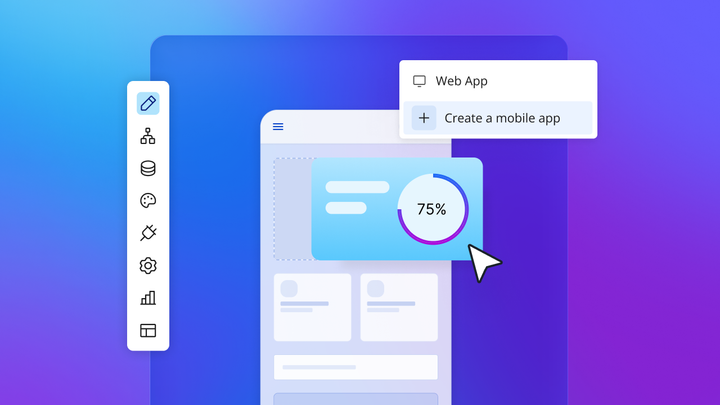
Cross-platform frameworks like React Native have simplified this by providing a single environment for both platforms. Bubble’s fully visual AI app builder, built on React Native, takes this further by generating apps with AI, then allowing you to chat with the AI Agent (beta) or switch to direct visual editing for precise control.
Traditional native development requires separate codebases for iOS and Android, doubling the work and cost. You’ll need specialized developers for each platform or multiple teams working in parallel, depending on complexity, plus ongoing hosting fees.
On Bubble, you can create a web app, a native iOS app, and a native Android app sharing the same database and core workflows. There aren’t separate codebases (or any codebases). No platform-specific languages, months-long timelines, or navigating the publishing rules. This dramatically reduces development costs, which can range from $5,000 to over $300,000.
With Bubble, you build once and deploy to both platforms from a single project. Updates are reflected across all app variants automatically, and maintenance is straightforward since you’re working with visual logic instead of platform-specific code.
Build your native mobile app
Native mobile apps deliver the performance, user experience, and security that users expect. And you no longer have to choose between native quality and the ability to build quickly.
With Bubble, you can vibe code without the code to build true native mobile apps for both iOS and Android from a single platform. Generate your app in minutes with Bubble AI, refine with the AI Agent (beta), or edit directly with Bubble’s fully visual drag-and-drop UI editor, conditional logic, and a built-in database. Then publish to both app stores with one click. Start building for free.
Frequently asked questions about native mobile apps
What are some examples of native mobile apps I use every day?
Many popular apps like Spotify, Instagram, and Google Maps are native apps. They’re downloaded from an app store and use device features like your camera, GPS, and push notifications without friction.
Can you tell if an app is native just by using it?
Often, yes. Native apps tend to feel faster, smoother, and more responsive. They also follow the design conventions of your phone’s operating system, so buttons, menus, and gestures feel consistent with other apps on your device.
Do I need separate apps for iPhone and Android with native development?
Traditionally, yes — you’d build and maintain two separate codebases. Bubble generates both iOS and Android apps from a single project, sharing the same database and logic.
How long does it typically take to build a native mobile app?
With traditional coding, a simple native app takes three to six months; complex apps can take a year or more. With Bubble, early adopters have gone from idea to live app in just 1–2 weeks.
Can small teams or solo founders realistically build native apps?
Yes. While native development once required specialized developers and significant budgets, Bubble’s AI-powered platform has made it accessible to non-technical founders and small teams — the traditional barriers of cost and coding expertise no longer apply.
Build for as long as you want on the Free plan. Only upgrade when you're ready to launch.
Join Bubble