TL;DR: A CRM builder is a platform that lets you create a custom CRM with your own data model, pipelines, automations, and dashboards instead of a rigid, off-the-shelf product. You can build one visually in days to weeks, configure an existing CRM in hours to days, or code one from scratch in months, depending on how custom your process needs to be.
Off-the-shelf CRMs come with someone else’s sales process built in, and the mismatch shows up as workarounds: renaming “deals” to fit your pipeline, ignoring fields that don’t apply, and keeping a parallel spreadsheet because it won’t bend to how you actually work.
A CRM builder lets you design your own instead, with the data types, stages, and automations your team actually uses. If you assumed that meant expensive custom development, it doesn’t anymore: A visual AI platform can get you there without a dev team.
This guide covers what one is, what it needs, and how to build it step by step. It also compares your options: a visual AI platform, an existing tool, or code. Then it covers what each one costs to roll out.
What is a CRM builder?
A CRM builder is a platform or toolkit that lets you design and launch a custom CRM, instead of forcing your team to adapt to a preconfigured product.
Think of it like the difference between buying a pre-furnished apartment and designing your own floor plan. A prebuilt CRM gives you furniture you didn’t choose. A CRM builder lets you decide what goes where.
The term “CRM builder” can refer to two things: the tool or platform used to build a CRM, or the process of building one yourself. This article covers both. When you build a custom CRM, you’re creating software designed to match a specific team’s workflow, data model, and automations rather than a generic sales template.
Here’s what a CRM builder lets you control:
- Your data model: You choose exactly which objects you track (like contacts, companies, deals, projects, quotes) and how they relate to each other. Your database reflects how your business actually works, not a vendor’s assumptions about what a sales team needs.
- Pipeline stages that match your process: You name and sequence stages to mirror your real sales or project workflow. If your sales cycle includes stages like “site visit” or “permit approval,” you can build that instead of forcing your team to work with generic “qualified” and “proposal sent” labels.
- Automations around your rules: You set up assignment logic, follow-up nudges, and SLA alerts based on your team’s actual triggers. When a deal stalls for seven days in your pipeline, you decide what happens next instead of relying on a vendor’s default behavior.
- Role-based permissions: You set field-level privacy rules so each team member sees exactly what they need and nothing they shouldn’t. Deal values might be visible to managers but hidden from sales reps, for example.
- Integration with your existing tools: You connect email, calendars, payment processors, and other services rather than being limited to a vendor’s native integrations. Your CRM works with your existing tech stack.
Why build a custom CRM instead of buying one?
Buying a CRM is faster to start. Building one takes more upfront planning and setup. The question is whether the time you save at the start ends up costing you more down the road, once you’re patching workarounds, watching adoption stall, or missing features you actually needed.
Teams choose to build for a few recurring reasons:
- Your process doesn’t map to standard pipeline templates. If your sales cycle includes stages like “site visit,” “permit approval,” or “proposal revision,” generic CRM labels like “qualified” and “proposal sent” force constant mental translation that slows your team down. Custom stages match how you actually sell instead.
- You need objects the vendor doesn’t support. If you need to track projects, subscriptions, equipment, or properties, support for those objects varies by vendor and plan. Some CRMs offer add-ons or field customization, but those may or may not match your exact workflow. Building lets you add the exact objects your business needs without waiting on a vendor’s roadmap.
- Per-seat pricing becomes a growth tax. Many CRM products charge per user per month, whether or not you’re using everything you’re paying for. A custom CRM built on a project- or usage-based platform can avoid that per-seat scaling, though your total cost still depends on plan, workload, storage, integrations, and maintenance.
- Adoption fails when the tool doesn’t fit. Sales reps who find a CRM confusing or irrelevant stop using it, and that’s usually where adoption breaks down. Over 40% of businesses have abandoned a CRM due to missing features. A CRM built around how your team actually works has a better shot at real adoption, which is the only thing that makes a CRM valuable in the first place.
- You want to own your data model. With a custom CRM, your data structure, export formats, and privacy rules are yours, so you’re not locked into a vendor’s object model or dependent on their export tools if you switch platforms later.
That said, building isn’t always the right call. If your process closely mirrors a standard B2B sales workflow and your team is small, a prebuilt CRM with strong integrations is likely the faster, lower-maintenance choice. Building is worth the investment when your process is genuinely different or when per-seat costs are a real constraint.
What does a custom CRM need?
There’s no need to build a CRM that does everything on day one. Start with the components that change behavior — the ones your team will actually use — and leave the rest for later.
A data model that reflects your business
Your data model is the set of objects your CRM tracks and how they relate to each other. It’s the foundation everything else is built on.
Start with five core objects.
Contacts are individual people: leads, prospects, or customers. Link each contact to a company and one or more deals, and you’ll see the full relationship at a glance without switching screens.
Companies are the organizations your contacts belong to. When multiple people at one company are involved in a deal, this lets you track the whole account relationship instead of just individual conversations.
Deals are the opportunities you’re tracking through your pipeline. Give each deal a value, a stage, a source, an expected close date, and a link to the relevant contact and company, and all the information lives in one place.
Activities are time-stamped records of emails, calls, meetings, and notes, tied to both the deal and the contact. They become your audit trail of what happened and when.
Users and teams round it out: the people using the CRM, with role-based permissions that determine who can view, edit, or approve records. Sensitive information stays visible only to the roles that need it.
Add custom objects like quotes, subscriptions, or projects only when they directly change how your team tracks or reports on work. Every object you add increases the complexity of your data model and the maintenance burden later.
Visual pipelines and record views
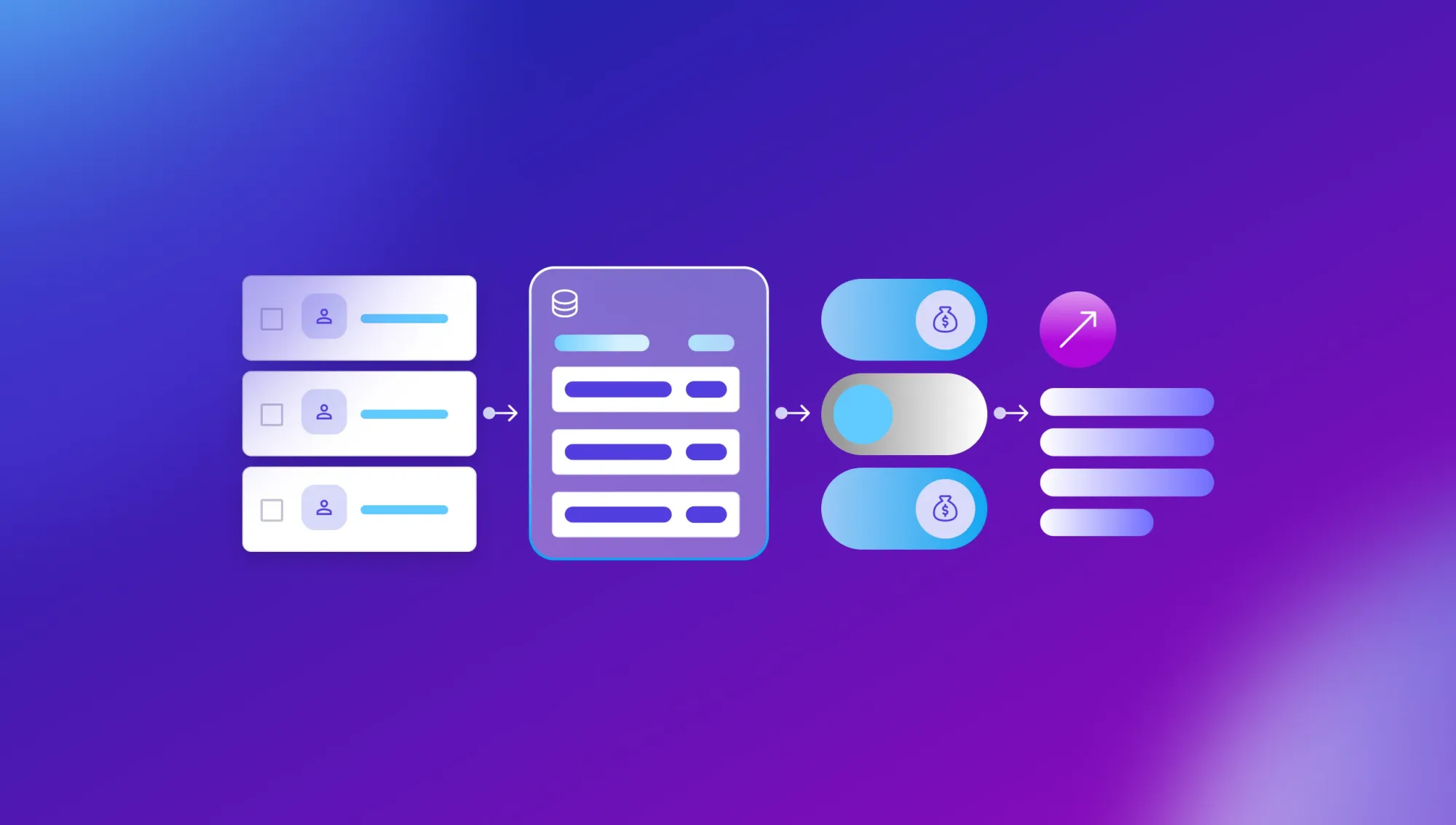
A pipeline is a visual representation of where each deal sits in your process, typically displayed as a kanban board with columns of cards, or as a list view. Each column is a stage, and each card is a deal, so you can see at a glance where work is moving and where it’s stuck.
A good pipeline sticks to real steps: four to seven stages that map to decisions or handoffs your team actually makes. A stage that doesn’t represent a meaningful shift in how you handle a deal probably doesn’t need to exist, and more than seven turns the pipeline into noise instead of signal.
Required fields at key stage changes keep the data honest. When a deal moves from “proposal sent” to “negotiation,” for example, the rep needs to fill in a close date and deal value, which keeps pipeline data clean without relying on manual discipline or reminders after the fact.
Most teams need more than one view. A kanban board is useful for spotting bottlenecks at a glance, a list view works better for bulk updates and filtering, and a calendar view helps with follow-up timing. At least two views lets different roles work the way they need to.
Stale deal alerts round this out: a flag or visual indicator when a deal hasn’t moved in a defined period, so nothing goes cold without someone noticing. The threshold should match your actual sales cycle length, not an arbitrary number.
Automations and AI features
Workflow automation means setting up rules that trigger actions automatically when conditions are met. For example, “when a new lead is created, assign it to the next rep in the rotation” or “when a deal has been in the same stage for seven days, send the owner a reminder.” Automations enforce data discipline and remove repetitive manual work, which matters because sales reps spend only 40% of their workweek actually selling.
A few automations are worth building first:
- Lead assignment: Route new contacts or deals to the right rep automatically based on territory, source, or round-robin logic. It eliminates the “who owns this lead?” question and speeds up response time.
- Follow-up nudges: Alert a rep when a deal goes stale or a contact hasn’t been touched in a set number of days, so deals don’t slip through simply because someone forgot.
- Stage-change checklists: Prompt reps to complete specific tasks before moving a deal forward, like adding a close date or attaching a proposal. Pipeline data stays accurate without micromanagement.
- SLA alerts: Flag deals that are approaching a response-time threshold so nothing slips past a deadline, which matters most for teams with contractual response requirements.
AI can take a lot of manual work off your plate, but only if the data underneath it is clean. Useful AI features in a CRM include summarizing a long email thread into one paragraph, pulling action items out of a call transcript, scoring leads by how likely they are to close, and suggesting the next best action.
Keep AI outputs visible and editable. A black box isn’t something your team should have to trust blindly.
Dashboards and permissions
A dashboard is a visual summary of your CRM’s key metrics, usually shown as charts, tables, or summary cards. A basic CRM needs a few of these views.
Pipeline value by stage shows the total deal value sitting in each stage, which helps you forecast revenue and spot where deals are piling up.
Conversion rate by stage shows the percentage of deals that move from one stage to the next. It’s the clearest way to see where deals stall and which stages need work.
Activity volume by rep shows calls, emails, and meetings logged per person, revealing who’s active and who might need coaching or support.
Win rate and average deal size are aggregate metrics that show what a healthy deal actually looks like, so you can set realistic expectations for new opportunities.
Role-based permissions determine who can view, edit, or delete records. A basic setup has three levels: admins configure the CRM, managers see every record on their team, and reps see and edit only their own.
Field-level privacy rounds this out, protecting sensitive data (like deal value or customer contact details) from roles that don’t need to see it.
How to build a custom CRM step by step
Building a CRM is a project with a clear sequence. Skipping steps, especially the first two, is the most common reason custom CRMs get rebuilt six months later.
Step 1: Map your process and define your users. Before opening any platform, document your pipeline stages, the fields that matter at each stage, and who on your team needs to view or edit which records. This becomes your build spec. Without it, you’ll make decisions in the tool that you’ll regret later when you realize a critical field is missing or a stage doesn’t match how your team actually works.
Step 2: Choose your path and set a narrow v1 scope. Decide whether you’re using a visual AI platform, configuring an existing CRM, or building from code. Then scope v1 ruthlessly: pipeline, contacts, basic automations, and one dashboard. Everything else is v2. The goal is to launch something useful quickly, then iterate based on real usage rather than assumptions.
Step 3: Model your data. Create your objects (contacts, companies, deals, activities, users) and define their relationships. Add sample data as you go so you can test views realistically. Set privacy rules as you create each data type, not after launch, because retrofitting security is harder than building it in from the start.
Step 4: Build your pipeline and record views. Create the kanban board, list view, and individual record pages. Add stage-change rules and required fields. Test with actual deal scenarios before moving on, since this is where you’ll catch mismatches between your planned stages and how deals actually move.
Step 5: Add automations. Build your assignment logic, follow-up nudges, and SLA alerts. Test each automation with a live trigger before adding the next one. Five well-tested automations are worth more than 20 untested ones that fire unpredictably or create notification spam.
Step 6: Connect your integrations. Hook up email and calendar first, since these drive activity logging, which is the data your dashboards depend on. Add payment processors, quoting tools, or other services only if they’re part of your core workflow and you’ve validated that you’ll actually use them.
Step 7: Run a security check and test with pilot users. Validate your privacy rules, run a security scan if your platform supports it, and run user acceptance testing with five to 10 pilot users using live deal data. Watch for gaps in the data model and stages that don’t match how your team actually works. Fix issues before the full rollout, not after.
Step 8: Roll out by role and set adoption metrics. Train each role separately, since reps, managers, and admins have different workflows and need different instructions. Set adoption KPIs from day one: pipeline completeness (percentage of deals with required fields filled), activity logging rate, and dashboard usage. Review weekly for the first month to catch problems early.
What are your options for building a CRM?
There are three realistic paths to build a CRM. The right one depends on how much control you need, how fast you want to move, and how much engineering capacity you have.
| Visual AI platform | Configure an existing CRM |
Build from code | |
|---|---|---|---|
| Best for | Teams that want full control without writing code | Teams whose process fits a standard sales workflow | Teams with dedicated engineering resources and specialized needs |
| Time to v1 | ⭐⭐⭐ Days to a few weeks |
⭐⭐ Hours to days |
⭐ Typically months |
| Control over data model | ⭐⭐⭐ Full — define any object and relationship |
⭐⭐ Configurable within the vendor's supported objects, fields, and add-ons |
⭐⭐⭐ Full |
| Maintenance | ⭐⭐⭐ Platform handles hosting, database, deployment, and platform-level security; you maintain workflows, data model, and privacy rules |
⭐⭐ Vendor handles infrastructure; you manage configuration |
⭐ Your team owns everything |
| Cost model | ⭐⭐⭐ Project-level subscription with usage-based components (workload, storage, add-ons) |
⭐ Per-seat pricing |
⭐⭐ Engineering time plus infrastructure |
| Data ownership | ⭐⭐⭐ Usually yours to export, though the app itself typically can't be exported as source code on a fully visual platform |
⭐⭐ Depends on vendor |
⭐⭐⭐ Full |
| Mobile support | ⭐⭐ Varies by platform: Some generate native iOS/Android apps from the same project as your web app, others are web-only or require separate tools |
⭐⭐ Mobile capabilities vary by vendor and plan — verify that the CRM's mobile apps support the workflows your team needs |
⭐⭐ May require separate native development or a cross-platform framework, depending on your stack |
| When AI gets stuck or limits appear | ⭐⭐⭐ Edit visually at any layer |
⭐ Limited to vendor's customization options |
⭐⭐⭐ Override with code |
Visual AI platform: Describe the CRM you want, and AI generates a starting point you refine visually instead of writing or reading code. There’s typically a learning curve with a visual editor, especially for anything beyond the basics. How much AI can generate outright, like backend workflows or native mobile editing, also varies by platform. Bubble stands out here: It generates your data model, UI, and workflows together in one pass, giving you a working CRM you can test right away. From there, you can edit any layer visually in visual workflows instead of re-prompting to fix it.
Configure an existing CRM: You start with a prebuilt product like HubSpot, Pipedrive, or Salesforce and customize it within the vendor’s supported objects, fields, workflow tools, editions, and add-ons. This is the fastest path to start, but you’re working within someone else’s data model. The trade-off is that per-seat pricing scales with headcount, and you’re dependent on the vendor’s roadmap for features that don’t exist yet.
Build from code: A developer writes the application from scratch using a programming language and framework. This gives you maximum architectural control. The trade-off is the highest upfront investment in time and cost, plus ongoing constraints from your chosen framework, infrastructure, and deployment targets. The maintenance burden also falls entirely on your team.
What does it cost to build a custom CRM?
The cost of building a custom CRM depends on which path you take, how complex your data model is, and how much of the work you do yourself versus outsourcing.
Visual AI platform costs: Most visual AI platforms charge based on usage (app complexity, records, or workflow runs) rather than per seat, so costs scale with activity, not headcount. On Bubble, that means a project-level subscription with usage-based components for workload, storage, and add-ons. The bigger investment is your time: mapping your process, building your data model, and configuring automations, with the platform handling hosting, deployment, scaling, and security as your CRM evolves.
Configuring an existing CRM costs: The primary cost driver is per-seat licensing, so your bill grows with headcount whether or not you’re using everything you pay for. Add-ons for AI tools, custom reports, and API access stack on top, and someone on your team still needs to manage configuration and integrations, which is easy to underestimate.
Building from code costs: The largest cost is engineering time: scoping, building, testing, and deploying a custom app takes significant developer hours. Infrastructure and ongoing maintenance, security patches, feature work, bug fixes, add to the total cost of ownership well beyond the initial build.
A few hidden costs show up across every path. Low adoption is the biggest one: A CRM that doesn’t fit gets ignored, and the real cost is the pipeline data you lose. Data migration is another: Moving contacts, deals, and activity history from a spreadsheet or old CRM takes time and usually needs cleanup. And shadow tools creep in when your CRM doesn’t cover part of your workflow, since your team ends up building the same workarounds in spreadsheets.
Build your custom CRM with Bubble
Bubble is the only fully visual AI app builder that lets you vibe code without the code, combining AI speed with visual control so you can launch real apps, not just prototypes. Describe your CRM, and Bubble AI builds a working foundation in minutes, UI, database, and workflows included for web apps. Native mobile AI generation is in public beta and expanding, so today it covers the UI while more capabilities roll out.
From there, the Bubble AI Agent (beta) is your speed button: Ask it to add features, troubleshoot, or iterate, and it builds right in front of you. When you want precision, or the AI hits a limit, drop into the visual editor and see exactly how your CRM works, from the database and privacy rules to the UI and workflows, all without touching code.
You also get the infrastructure most teams would otherwise have to build themselves: hosting, database management, deployment, automatic scaling, privacy rules, and enterprise-grade security, including SOC 2 Type II compliance and a built-in security dashboard. That means you can launch a production-ready CRM and keep control as your team grows.
Start building your CRM for free →
Frequently asked questions
What is a CRM builder?
A CRM builder is a platform or toolkit that lets you design and launch a custom CRM — with your own data model, pipeline stages, automations, dashboards, and permissions — instead of adapting your process to fit a prebuilt product.
How is building a custom CRM different from buying an off-the-shelf CRM?
An off-the-shelf CRM provides a predefined product model that you customize within the vendor’s supported objects, fields, workflow tools, editions, and add-ons. A custom CRM is built from the ground up to match your specific process, data model, and automations — giving you full control over what you track, how deals move, and who sees what.
Can I build a custom CRM without knowing how to code?
Yes. With Bubble, you can use AI to generate a working foundation, then refine the CRM visually across the database, UI, workflows, and privacy rules. The trade-off is a learning curve with the visual editor. Building from code gives you more architectural flexibility but requires engineering resources and ongoing maintenance.
What objects should a basic custom CRM include?
A basic custom CRM needs five objects: contacts (individual people), companies (the organizations they belong to), deals (the opportunities you’re tracking), activities (emails, calls, and meetings), and users with role-based permissions. Add custom objects — like quotes or projects — only when they directly change how your team works or reports.
How long does it take to build a custom CRM from scratch?
Timelines vary with scope, integrations, data migration, and security requirements. Configuring an existing CRM can be fastest for standard workflows. On a visual AI platform, a v1 with pipelines, core automations, and a basic dashboard typically takes days to a few weeks depending on data model complexity and integrations. Building from code usually requires the most engineering effort and often runs into months.
Build for as long as you want on the Free plan. Only upgrade when you're ready to launch.
Join Bubble