TL;DR: No-code uses visual, drag-and-drop interfaces to build apps you understand without writing code. Vibe coding uses AI to generate source code from prompts, fast to start but hard to maintain if you can’t read it. The key difference: transparency. No-code stays editable; vibe coding can leave you with opaque code.
You need to build an app, and you don’t want to write it from scratch. Two shortcuts promise to get you there: drag-and-drop visual tools, or AI that writes the code for you.
The first approach is usually called no-code. The second is known as vibe coding. The two terms often get blurred, but the key difference is what you’re left with: visual logic you can edit, or generated code you may not understand. That difference determines whether you can fix your app when something breaks.
This guide covers what each term actually means today, how they compare on speed and control, the honest trade-offs of each, and a framework for choosing between them. It also covers a third option: platforms like Bubble that combine the two, so you get AI speed without giving up the ability to fix what you build.
What is no-code and what is vibe coding?
No-code and vibe coding both let you build software without writing traditional code. That’s where the similarity ends. No-code is more like an open kitchen, where you can watch every dish come together and step in yourself if you want to. Vibe coding is more like ordering at a counter: You say what you want, and it appears, but you never see how it was made.
What is no-code?
No-code is a way to build apps by arranging visual components through a drag-and-drop interface. Buttons, databases, and workflows all appear as elements you can click and connect without touching a programming language. The logic of your app shows up as visual workflows or structured menus, letting you read exactly how everything works.
Many full-stack no-code platforms (including Bubble) handle key infrastructure such as hosting, database management, and security tooling for you. Most day-to-day apps fit comfortably within what the platform supports. Truly unusual features are the exception: They may need extra plugins or workarounds, and every so often you’ll hit a genuine platform boundary.
Here’s what defines no-code:
- Visual interface: You build by clicking and dragging. Buttons, forms, databases, and logic appear as components you arrange without code.
- Readable logic: Workflows show up visually in an editor you can read and modify directly, not as code you need to decipher.
- Managed infrastructure: The platform handles hosting, security, and scaling, reducing the technical work required to launch.
- Platform boundaries: You work within the features and integrations the platform supports, which handles most use cases but can limit highly custom needs.
What is vibe coding?
Vibe coding is a way to build apps by describing what you want in plain language and letting an AI model generate the underlying source code. You interact through conversation, not a visual editor. The term was coined by Andrej Karpathy in February 2025 to describe building software by prompting AI rather than writing code yourself, and it quickly became widely associated with AI-assisted software building.
Source code is the raw programming instructions (JavaScript, Python, and similar languages) that a computer executes. When an AI generates source code, it’s writing those instructions for you. You get speed, but it’s code you may not be able to read, debug, or maintain without technical skills.
Here’s what defines vibe coding:
- Natural language input: You describe features in plain English like “add a login page with Google sign-in” and the AI translates that into code that runs behind the scenes.
- AI-generated source code: The output is traditional programming code, which gives you flexibility but requires technical skills to read or modify directly.
- Prompt-based iteration: Changes happen through conversation. You describe what you want adjusted and the AI rewrites the code, which can create compounding errors if the AI misinterprets context.
- Separate infrastructure: Deployment, hosting, and database setup typically require additional tools beyond the AI tool itself.
How do no-code and vibe coding compare?
Both approaches let you build without traditional programming, but they work differently once you move past the first draft. The differences show up when something breaks, when you need a specific feature, or when you’re ready to scale.
| No-code | Vibe coding | |
|---|---|---|
| How it works | Visual drag-and-drop editor with logic shown in a visual workflow editor | Describe features in plain language and AI writes source code |
| What you see | Visual workflows and components you can read and edit | Code you may not be able to read or modify |
| Speed to first draft | Fast: Visual tools guide you through setup | Very fast: AI generates a working prototype in minutes |
| Customization | Within the platform's supported features and integrations | Unlimited in theory, but requires coding skills beyond AI limits |
| When something breaks | Edit visually: You can see and fix the problem directly | Prompt the AI again and hope, or open the code yourself |
| Security and governance | Built-in privacy rules, access controls, and compliance tools you configure directly | Depends on what the AI generates: Vulnerabilities may hide in code |
| Maintenance | Visual logic is readable by non-technical team members | Requires someone who can read the generated code |
| Scalability | Full-stack platforms typically include hosting, database management, security, and deployment, so apps can grow from prototype to production | Requires separate infrastructure setup and management |
| Best for | Non-technical founders, teams, and businesses building production apps | Developers or technical builders who can read and debug the output |
The real difference isn’t speed — both are fast to start. It’s what happens when you need precise control or when something goes wrong.
What are the real trade-offs of each approach?
Both approaches have meaningful strengths and specific limits. Understanding what each one feels like to use in practice helps you make an informed choice.
No-code strengths and limits
No-code platforms work well when you need to launch quickly and maintain control over what you’ve built. Here’s where they excel and where they reach their edges.
No-code gives you these advantages:
- Transparency: Because logic is visual, non-technical team members can understand how the app works, spot errors, and make changes without a developer. This matters when you’re maintaining a product over time.
- Built-in security: Privacy rules, access controls, and compliance resources are often built into the platform and visible to builders. You still need to configure those tools correctly for your specific app.
- Production-ready infrastructure: Hosting, database management, and scaling are handled by the platform. You’re not configuring servers or managing deployment pipelines to go live.
- Iteration without a developer: When a stakeholder requests a change, you can make it directly in the visual editor: no code review, no deployment pipeline, no waiting.
No-code has these limitations:
- Platform boundaries: No-code platforms support a wide range of features. If your app requires something highly unusual (a deeply custom algorithm, a niche hardware integration), you may hit the edges of what the platform supports.
- Learning curve: Visual editors have their own logic and structure to learn. It’s not as steep as learning to code, but it’s not zero. Expect to invest time understanding how the platform organizes data, workflows, and design.
- Vendor dependency: Your app lives on the platform’s infrastructure. You’re dependent on that platform’s uptime, pricing, and roadmap decisions.
Vibe coding strengths and limits
Vibe coding delivers impressive speed for technical builders and those who can read the output. Here’s where it works and where it struggles.
Vibe coding gives you these advantages:
- Speed of first draft: You can go from idea to working prototype in minutes by describing what you want. No setup, no blank canvas, no manual component configuration.
- Flexibility in theory: Because the AI generates actual source code, there’s no hard ceiling on what’s possible. Any feature that can be coded can theoretically be prompted.
- Familiar output for developers: If you can read and write code, vibe coding gives you a head start on a codebase you can then modify directly. It’s a productivity tool for technical builders.
Vibe coding has these limitations:
- The debugging gap: When the AI-generated code breaks — and it will — your options are to prompt the AI again, which can introduce new errors, or open the code yourself. Harness found that 72% of organizations have experienced a production incident caused by AI-generated code. If you can’t read the code, you’re stuck.
- Hidden technical debt: AI-generated code can accumulate structural problems that aren’t visible until you try to add a new feature or scale the app. Enough builders and agencies are cleaning up after AI-generated codebases that “vibe coding cleanup” has emerged as a recognizable niche of work.
- Security blind spots: Privacy rules, access controls, and data handling logic are generated by the AI. You can’t always verify that they’re correct without reading the code, which creates risk for apps handling user data. A scan of over 1,400 vibe-coded production apps found 65% had security issues.
- Infrastructure gap: Many AI coding workflows still leave you responsible for decisions around hosting, databases, deployment, and ongoing code maintenance. You’ll typically need to set those up separately from the AI tool that generated the app.
Which approach is right for you?
The right choice depends on your technical background, what you’re building, and how you plan to maintain it. Here’s a practical framework for deciding.
- No-code may be the better fit if you’re non-technical and building for the long term. If you plan to maintain, iterate, and grow your app yourself (without a developer on call), visual logic you can read and edit directly is a significant practical advantage.
- Vibe coding may be the better fit if you can read the code it generates. For developers who want to accelerate their workflow, AI-generated code is a genuine productivity tool, as long as you have the skills to debug, refactor, and extend it.
- Vibe coding may frustrate you if you can’t debug the output. Getting to a working prototype is fast; getting to a polished, production-ready app often requires precise changes that are hard to make through prompting alone.
- No-code may frustrate you if your app requires deeply unusual features. If your core use case sits at the edge of what the platform supports, you’ll spend time working around constraints rather than building.
- Consider your team. If other people need to understand, modify, or maintain the app, visual logic is significantly easier to hand off than AI-generated code.
Is there a path that combines both?
Bubble represents a third approach. You get the speed of AI without being locked out of what it produced.
Here’s how it works: You describe what you want and AI generates a working app. But instead of producing source code you can’t read, everything is represented visually. Workflows appear in a visual editor. Database structure appears as a visual schema. Design elements appear as components you can click and edit. When AI hits its limits, you can keep chatting with the Bubble AI Agent (beta) to add features and troubleshoot, or switch to the visual editor to make the precise change yourself, all while still seeing what changed.
Real Bubble apps show this in practice. Dyspute.ai, an AI-powered legal mediation tool, and Formula Bot, a data analytics tool that grew to a million users, were both built this way: AI got them started, and the visual editor took them to production.
What the hybrid approach addresses:
- AI speed without the black box: AI generates your app’s UI, database, and workflows in minutes. But the output is visual, not code, so you can read and understand what was built.
- Direct editing when AI reaches its limits: Instead of re-prompting when something isn’t right, you can open the visual editor and make the precise change yourself.
- Visible logic for the whole team: Because workflows are shown visually in natural language, non-technical team members can understand and contribute without a developer translating.
- Built-in infrastructure: Hosting, database management, security, and deployment are included. You don’t need to configure separate services to go from prototype to production.
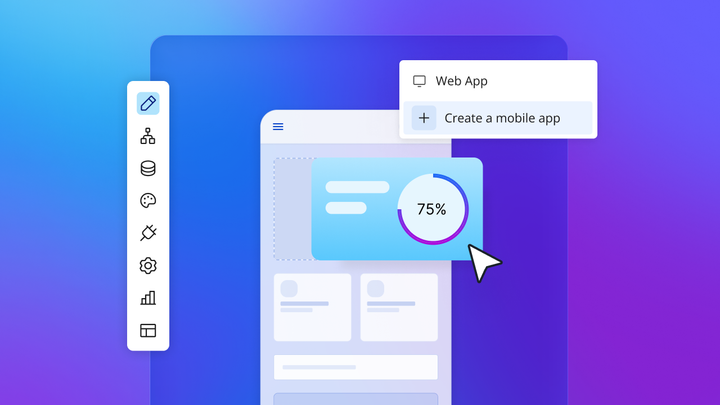
Bubble AI generates complete apps for web and native mobile, then the visual editor gives you full control over every detail.
Build apps you understand and control
No-code and vibe coding aren’t competing answers to the same question. No-code prioritizes visibility and control through visual interfaces. Vibe coding prioritizes speed and flexibility through AI-generated code you may not be able to read.
Bubble breaks that trade-off. You get the speed of AI without being trapped in code you can’t read, plus the control of a fully visual editor. Start with AI, then use visual editing to control every layer of your app and launch to real users. Bubble lets you vibe code without the code.
If you’re building something you plan to launch, iterate on, and grow, you need to move fast and edit just as easily. Start building on Bubble for free today.
Frequently asked questions
Can non-technical builders ship production apps with vibe coding?
Getting to a working prototype with vibe coding is fast, but shipping a production app — one that handles real users, real data, and real security requirements — typically requires the ability to read and debug the generated code when something breaks. Non-technical builders who can’t do that often get stuck at the final stages.
Does vibe coding replace no-code?
Vibe coding and no-code solve different problems. Vibe coding accelerates the first draft for technical builders. No-code gives non-technical builders a visual environment they can understand and maintain over time. The two approaches can also be combined: Bubble pairs AI generation with visual editing so you get the speed of vibe coding without being stuck with generated code.
Which approach handles security and compliance better?
No-code platforms like Bubble can make security and compliance more inspectable for non-technical builders by providing visual privacy rules, access controls, and compliance resources. Builders still need to configure those tools correctly. With vibe coding, security logic is generated by the AI: Veracode found security weaknesses in 45% of AI-generated code, which means vulnerabilities can hide in code you may not be able to audit.
What is technical debt and why does it matter for vibe coding?
Technical debt refers to structural problems in a codebase that build up over time and make future changes harder. With vibe coding, AI-generated code may accumulate technical debt if the builder cannot review, refactor, and maintain the code, which can make future features and scaling significantly more difficult.
What’s the difference between no-code and low-code platforms?
No-code platforms require no programming — everything is built through visual interfaces. Low-code platforms also use visual tools, but they expect users to write some code for advanced customizations or integrations. Traditional vibe coding sits in a different category because it generates source code from prompts. Bubble’s visual AI approach keeps the speed of prompting but represents the app as editable visual components, workflows, and data structures instead of code.
Build for as long as you want on the Free plan. Only upgrade when you're ready to launch.
Join Bubble