TL;DR: Healthcare app development means building digital tools for patients, providers, or both. Doing that the traditional way is usually slow and expensive. Bubble lets you build these apps visually, without code. Keep in mind Bubble isn’t HIPAA compliant, so if your app touches protected health information, route that data through a HIPAA-compliant system instead.
Two kinds of builders usually make healthcare apps. Founders who want to build something patients will use directly, like telehealth or wellness apps, and providers who want to build internal tools like scheduling or clinical work. Both need to make sure the data is secure and that the app works with whatever other systems and services it will connect with.
This guide covers the types of healthcare apps you can build, the features they need, how to build them on Bubble without code, and how to get compliance right from day one, including what you should know about working with Protected Health Information (PHI) and Health Insurance Portability and Accountability Act (HIPAA) needs.
What types of healthcare apps can you build?
Most healthcare apps fall into one of two groups, either those that patients use directly, or tools built for clinical and operations staff. Here’s a closer look at the most common types of each.
- Telemedicine apps: Video or chat-based tools for remote visits, now used by 82% of healthcare providers. A typical example is a booking flow that matches patients with available providers and kicks off a video call through an API like Daily or Twilio.
- Patient portals: Authenticated spaces where patients check appointments, results, or messages, such as a dashboard where patients log in to see upcoming appointments and message their care team directly.
- Remote monitoring dashboards: Provider-facing tools that show data from wearables or patient-submitted vitals, with alerts when something falls outside the normal range. These usually pull in data from external devices through APIs.
- Lifestyle and wellness apps: Consumer-facing tools for mental health, journaling, fitness tracking, diet logging, or building habits. These usually carry a lighter compliance load than clinical apps, as long as you’re not a covered entity and you’re not collecting PHI.
- Provider and internal tools: Staff-facing apps for managing referrals, processing intake, scheduling shifts, or assigning tasks. These help clinical and operations teams coordinate without relying on email, spreadsheets, or paper forms.
What features does a healthcare app need?
Not every healthcare app needs the same features. A wellness app has a much lighter compliance and integration burden than a clinical tool that stores PHI or connects to hospital systems. However, most healthcare apps share a core set, which includes a secure login, data protection, and clear rules about who can see what.
Here’s what that looks like feature by feature.
- Secure login: Multi-factor authentication, plus biometric access on mobile like Face ID or Touch ID, to confirm who’s asking before you hand over sensitive records. That way, even if someone gets hold of a user’s device, they still can’t get in.
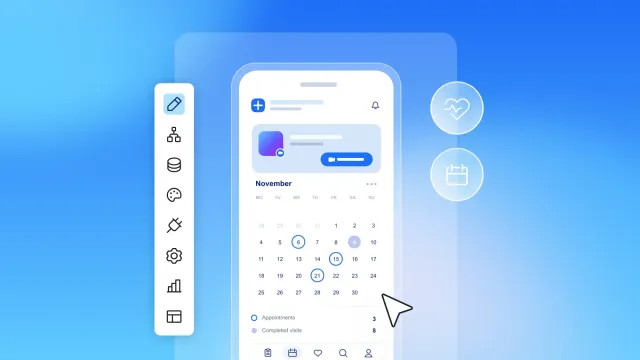
- Appointment scheduling: A calendar-based booking system with automated reminders, so patients can see open slots, book directly, and get a confirmation email or push notification instead of calling in.
- Messaging workflows: Authenticated in-app messaging, protected by privacy rules and encrypted in transit.
- Role-based access control: Permissions that decide what each type of user can see and do. A patient sees only their own records, an admin sees everything, and a coordinator sees just the referrals assigned to them.
- Audit logging: A record of who touched what data, and when. Many regulated healthcare workflows require this kind of audit trail.
- EHR or data integration: Connections to electronic health record systems through healthcare interoperability standards, which let your app read or write patient data from existing systems instead of manual entry. FHIR is one such standard, an HL7 spec commonly exposed through RESTful APIs, and 81% of countries now use it for at least a few national use cases, up from 71% the year before. HL7 also covers a broader family of data-exchange standards.
- Notifications and reminders: Push notifications and email alerts for things like appointment confirmations, medication reminders, or follow-ups. Small touches like these keep patients engaged and take work off your staff’s plate.
One feature that needs careful thought is HIPAA. Bubble is SOC 2 Type II compliant, and we encrypt data in transit and at rest. That said, we don’t currently support HIPAA-compliant apps, and we don’t yet recommend building anything that requires HIPAA compliance on Bubble.
In practice, that means Bubble shouldn’t be the system of record for PHI. Any patient data, message, or file that counts as PHI needs to live in a HIPAA-compliant external system instead, connected to your Bubble app through the API Connector.
If you’re not sure whether something you’re collecting counts as PHI or what your organization’s HIPAA requirements actually look like, loop in legal before you build.
What you can build in your healthcare app with Bubble’s visual editor
Bubble combines AI generation with a fully visual editor. You start by describing your app in plain language, and Bubble AI generates the design, database, and workflows for a working first version in minutes. From there, you refine your app until it’s ready by chatting with the Bubble AI Agent (beta) or skipping the prompt and working in the visual editor. Either way, you don’t have to deal with code.
Here’s a closer look at three things you can build with Bubble: your public and authenticated pages, a core web app, and native mobile.
Build a public site or patient hub from the same Bubble project
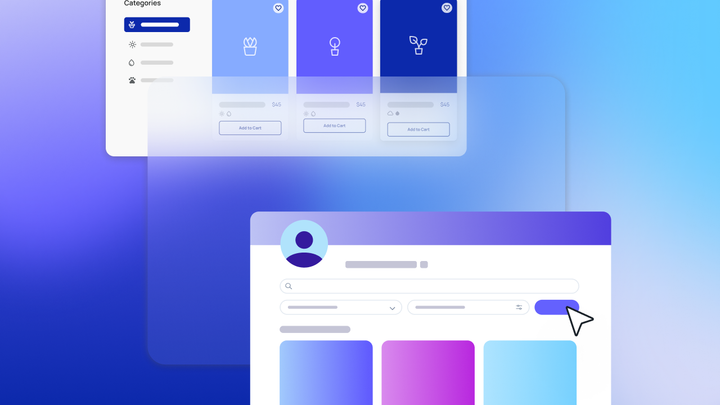
One Bubble project can hold your public pages and your authenticated ones, all in the same app. Before someone logs in, they see the public side, like your marketing site or pages about what you offer. Once they log in, they land somewhere authenticated, like a patient dashboard or a provider portal. Bubble takes care of signup, login, and password reset for you, so there’s no separate identity service to set up.
Behind the scenes, workflows route visitors based on their role, using fields on the User data type. As a patient, you might see your appointments and test results, while as a provider, you might see your schedule and patient list instead. Custom domains come with SSL built in, so the public site and the logged-in app can share one clean URL, like yourhealthapp.com.
Build a web healthcare app with visual workflows and privacy rules
You define your data model visually inside Bubble’s database designer. For a healthcare app, that typically means setting up data types like Patient, Appointment, and Provider, each holding its own fields, such as a patient’s name and date of birth, or an appointment’s time and provider. Privacy rules control who can see or edit that data, and the Agent can set them up as it builds, though it’s worth double-checking them yourself before anything sensitive goes live.
Workflows handle the logic. For example, if a patient submits an intake form, Bubble can create an Appointment record and automatically send a confirmation email. Ask the Agent to build a workflow like that, and it will show you exactly what it created.
Before launch, the security dashboard scans for common issues like missing privacy rules or exposed credentials. And if you need to connect to an EHR or another external service, the API Connector handles that too, through a point-and-click interface instead of custom code.
Publish native iOS and Android apps that share one Bubble backend
Bubble builds native apps for iOS and Android using React Native, the same framework behind many well-known apps. Since it’s native rather than a mobile-friendly website, your app gets real device features, like push notifications for appointment reminders, biometric login with Face ID or Touch ID, camera access for document uploads, and location services to help patients find nearby providers.
Your web and mobile apps share the same database, users, and backend logic, so once you build something like appointment creation, that feature will work in both places. You’ll still design some mobile-specific screens and interactions, but you’re not rebuilding the backend twice.
You can push small changes, like text or design tweaks, instantly through over-the-air updates, without waiting on app store review. For bigger changes, you’ll also need a new build and app store approval. Bubble packages and submits your app straight from the editor, but you’ll still need your own Apple and Google developer accounts to actually publish it.
Healthcare app examples you can build on Bubble
These are the kinds of healthcare apps builders actually build on Bubble, and the specific features that make each one possible.
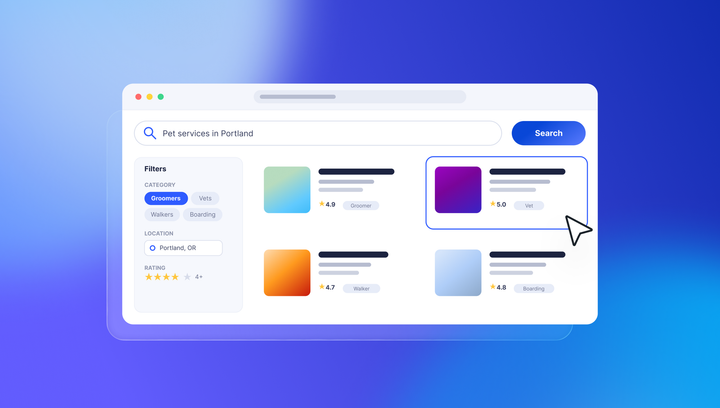
- Appointment booking apps: A patient-facing scheduling tool where people browse open time slots, book with a provider, and get automated reminders. Built with Bubble’s database to store appointments, repeating groups to show available slots, and workflow-triggered emails to confirm bookings.
- Telehealth shells: A booking and intake layer that routes patients into a video visit. Bubble handles the scheduling and intake forms, while an external HIPAA-compliant video and messaging service, connected through the API Connector, covers the clinical conversation itself.
- Patient portals: An authenticated web app where patients log in to view non-PHI records and message their care team. Bubble’s privacy rules and file-hosting controls can restrict file access in non-HIPAA contexts, but lab results, prescriptions, and other PHI belong in a HIPAA-compliant system instead.
- Mental health and wellness apps: A journaling or mood-tracking app where people log entries, watch trends over time, and get AI-generated prompts or insights. These tend to fit better here when they steer clear of PHI and regulated clinical workflows. Adding AI features like sentiment analysis or personalized recommendations, through Bubble plugins or the API Connector, means checking data-sharing, subprocessors, consent, and privacy obligations first.
- Remote monitoring dashboards: A provider-facing dashboard showing patient-submitted vitals or wearable data, with workflows that trigger an alert when a reading falls outside the normal range, say a blood pressure spike, so the care team hears about it right away.
- Internal provider and operations tools: Staff-facing apps like referral trackers, intake processors, shift schedulers, task managers, and provider dashboards, built with role-based privacy rules so each team member only sees what’s relevant to their job.
AI features and internal provider tools you can build today
A healthcare provider can build an internal tool on Bubble without hiring developers. Here’s what that looks like, using a referral management tool as an example:
- Describe the tool to Bubble AI, and it generates a working first version, including database, pages, and sample data.
- Ask the Agent to add a workflow. Tell it something like, when a referral is marked urgent, notify the assigned provider by email, and it builds that visually.
- Set privacy rules so each role sees only what’s relevant. An admin sees everything, a coordinator sees their team’s referrals, a provider sees just their own.
- Deploy. A web-based tool can go live without managing DevOps, though native mobile still needs its own app-store process.
For non-HIPAA, non-PHI tools like this, the full stack comes built in. Tools that touch PHI or need HIPAA compliance still need compliant external systems and legal review.
You can also connect LLM services through Bubble plugins or the API Connector to add AI-powered features, like summarizing non-PHI intake notes, drafting referral letters, or helping staff triage and route non-diagnostic intake requests. Keep sensitive data on services with the right compliance agreements in place, and make sure a human still reviews any clinical decision.
Frequently asked questions
How does Bubble handle data privacy for healthcare apps?
Bubble is SOC 2 Type II compliant and provides privacy rules, a security dashboard, and encryption in transit and at rest. However, Bubble doesn't currently support HIPAA-compliant apps and doesn't recommend using Bubble for apps that require HIPAA compliance. Builders handling PHI should use HIPAA-compliant external systems, avoid storing PHI in Bubble, and consult qualified legal and compliance counsel.
Can Bubble connect to EHR systems like Epic or Cerner?
Bubble’s API Connector supports REST/JSON API connections, so you can connect to compatible FHIR APIs from Bubble’s visual editor when the EHR vendor grants API access and the integration meets the vendor’s authentication, contract, and compliance requirements. HL7 integrations that require a dedicated middleware layer would typically be handled by an external integration service connected to Bubble via API.
Can a healthcare app built on Bubble run on both web and mobile?
Yes. A single Bubble project can support web and native iOS and Android experiences with a shared backend, database, users, privacy rules, and backend workflow logic. Native mobile UI and some frontend workflows may need platform-specific setup.
How long does it take to build a healthcare app MVP on Bubble?
Bubble AI generates a working first version in minutes from a plain-language prompt. From there, testing a functional MVP built around core features like scheduling, user authentication, a database, and basic workflows depends on complexity, integrations, compliance scope, and whether PHI or native mobile app-store review is involved.
How can a healthcare provider build an internal tool without hiring developers?
A healthcare provider can use Bubble AI to generate a working internal tool from a plain-language description, then use the Bubble AI Agent to add workflows and role-based access visually. Because Bubble combines AI generation with visual editing, non-technical staff can often build and maintain non-PHI internal tools without waiting on engineering. Regulated workflows, PHI, and EHR integrations should still involve compliance and technical review.
What does security look like before a healthcare app goes live on Bubble?
Bubble’s security dashboard can be run before launch to check for common risks. Basic checks are available on paid plans and cover issues like missing privacy rules and exposed sensitive credentials. Advanced checks such as database exposure risks and compromised API tokens require the Growth, Team, or Enterprise plan. Builders should also review their privacy rules for each data type and test role-based access with different user accounts before publishing.
Build for as long as you want on the Free plan. Only upgrade when you're ready to launch.
Join Bubble