
TL;DR: Bubble is a fully visual AI app builder that enables anyone—from first-time entrepreneurs to enterprise teams—to create real apps without coding, including AI-powered tools, marketplaces, mobile apps, and SaaS platforms, with a community of 6 million builders having created over 7 million apps across 220+ countries. The platform combines instant AI generation with complete visual control, allowing users to build everything from simple websites to complex applications like CRMs, social networks, and enterprise tools that can scale to millions of users.
When you’re building a startup, speed is everything — but speed without control is just chaos.
If you’re looking to launch and grow a digital product, you might be wondering, “Is there a way to build this myself faster, without having to hire someone to code it or maintain it once it’s built?”
With Bubble, the answer is absolutely.
Bubble is a fully visual AI app development platform that allows anyone to vibe code without the code to build, launch, and manage a fully functional app that can scale. Chat with AI when you want speed, edit directly when you want precision — and see exactly how everything works. Our truly codeless approach means anyone from first-time entrepreneurs to enterprise teams can take an idea from concept to reality and beyond.
Not sure if Bubble will work for your idea? It almost certainly will.
In this article, we'll show you the most popular types of apps you can build on Bubble, featuring successful examples from our community of 6 million builders, from AI-powered tools and custom marketplaces to native mobile apps and enterprise-grade SaaS platforms.
Got an idea already? Jump to an example in the table of contents on the side.
What you can build with Bubble’s no-code AI app builder
Bubble's AI-powered, full-stack platform handles everything — from instant AI generation to precise visual editing. You can see exactly how each piece works, whether AI built it or you did. Bubble gives you both the speed of AI and complete visual control over every layer of your app.
- Design your app's look and feel — let the AI Agent generate it instantly, then customize everything with the help of the AI Agent or the no-code visual design tools
- Create functionality — the AI Agent can generate the logic rules that power your app for you, or you can build out the steps yourself on a canvas
- Organize and manage your app's data — the AI generates data types and privacy rules automatically, then you can see control everything visually
Plus, you can integrate with other tools in your tech stack (like Slack or calendar apps) via plugins and APIs — and the AI Agent can guide you through complex setups step-by-step.
With Bubble, you can build across three main categories: websites, web apps, and native mobile apps.
Websites
You might hear any piece of digital, online software called a “website,” but a true website is a static landing page (or related set of landing pages) accessed via a browser. Bubble is great for building websites—in fact, we built Bubble’s website on Bubble!
Generate your website design with Bubble AI in minutes, then refine workflows for buttons, search, and more with the help of the AI Agent or in the visual editor.
Minimum Studio is another great example of how to build a website on Bubble. They’ve created a highly interactive and visually stunning website that’s not only received overwhelming positive feedback from their clients and prospects, but also earned them “Best Homepage Design” at the BubbleCon2024 Community Awards.
The sleek design and advanced interactions are made possible by Bubble's no-code, AI-powered platform. It’s a great example of how you can achieve clean, ambitious, effective design on Bubble. But websites only scratch the surface of what you can build.
Web apps
A web app is an interactive piece of software that runs in your browser. Unlike a website, which is static, web apps have functionality and interactivity that allow visitors to accomplish goals or perform tasks.
Web apps range from simple to-do list managers to complex CRMs or social media platforms. Even more than with websites, this is where Bubble really shines — because Bubble AI generates complete applications in minutes with built-in databases, workflows, and everything you need.
Bubble can even easily handle apps that run and use AI models like ChatGPT, Claude, and more through plugins or API connections. In Bubble’s 2024 Community Awards, the “Most Innovative” and “Fastest Growing” app categories were both won by apps using AI.
Take Ringly, for example. Built on Bubble, Ringly offers AI-powered phone agents that can fully automate business calls. Or WriteHuman, one of the fastest-growing apps on Bubble, that offers an AI-driven solution to help businesses create content at scale. Even apps with very complex workflows, backends, databases, and logic can be built—and scaled—on Bubble.
Native mobile apps
Native mobile apps are software you download and access from your phone or another device. The apps are “native,” meaning they’re built and designed for a specific operating system (OS), and often use gestures, interactions, push notifications, and other device-specific functionality.
Our native mobile app builder is now in public beta for everyone, and our builders have already created some really exciting products:
- ChurchSpace uses an Airbnb model to connect empty churches with anyone looking for space. Since partnering with Rapid Dev to build their native mobile app on Bubble, they’ve been able to work three times faster and save five times the cost compared to traditional code.
- Idea Link just published their native mobile app built on Bubble in the Apple App Store. You can download Sentio, an AI-driven app that helps you track and understand your emotions, offering personalized support and insights to improve your mental health.
- VisionUs is partnering with WeGetDesign to build pebblz, a mobile app that’s making volunteering more accessible through micro-challenges and instant recognition. In a space that’s been historically resource-strapped, VisionUs has been able to work seven times faster with Bubble.
When building mobile apps on Bubble, Bubble AI can generate your native iOS and Android app instantly.
With one platform for both native and web apps and a shared backend, you can reach more audiences faster. Publish directly to the Apple App Store and Google Play Store from the Bubble editor—they work for iOS and Android right out of the box, no wrapper needed.
App examples built on Bubble
Bubble has powered 6 million builders to create more than 7 million apps across more than 220 countries and territories worldwide. Our community of builders and founders continues to create innovative, helpful solutions.
Here are some of the best no-code examples of the different kinds of apps you can build on Bubble.
Artificial intelligence solutions
Artificial intelligence (AI) is everywhere these days, so why not harness its power for your Bubble app? Bubble makes AI accessible from day one. There are already thousands of Bubble-built apps using AI to power innovative solutions. Use the AI Agent to build faster, then create apps with AI features at the center — like ChatGPT-style AI chatbots — or simply incorporate AI as a powerful feature of your app.
Synthflow
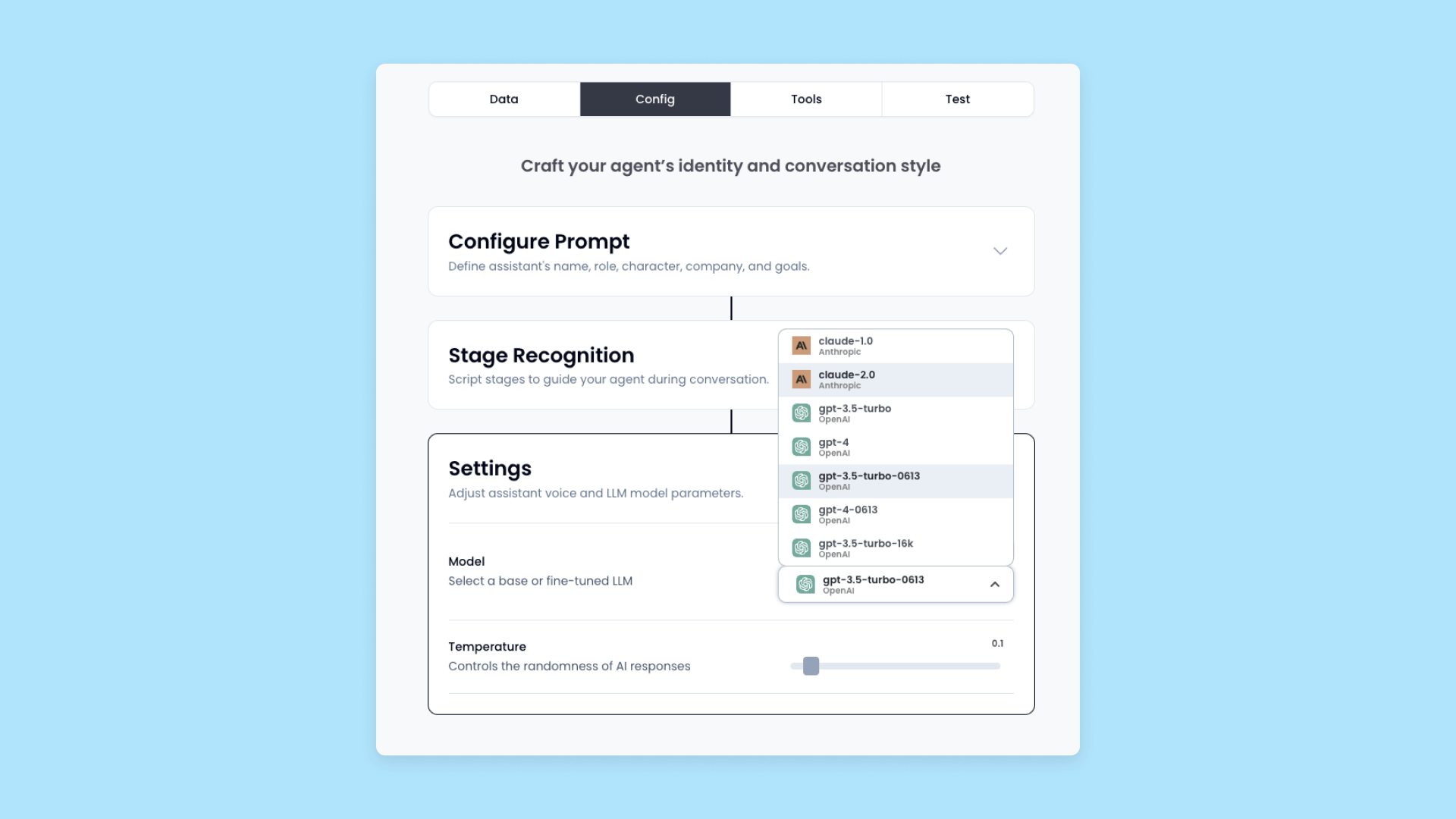
Synthflow helps teams build their own AI phone agents for specific purposes (such as scheduling appointments or generating leads)—all without having to write code. For no-code enthusiast and Synthflow founder Albert Astabatsyan, building Synthflow on Bubble took just two weeks. This speed offers them a competitive advantage in a rapidly changing AI market.
“We love to be in this ecosystem,” co-founder Hakob Astabatsyan said. “Bubble is becoming larger and larger. It’s probably the ultimate horizontal solution out there that allows people to build applications. I think that’s a great thing in general—building and supporting the ecosystem we really love.”
Formula Bot

Formula Bot has more than 1 million users — and only one full-time employee (its founder).
This AI app helps teams simplify complex data tasks through data integration and AI-powered formula generation for prepping, analyzing, visualizing, and enriching data. You can even upload your data to their chatbot and "chat" with your data—asking questions and letting AI read and analyze your data to provide you with the answer—no formulas needed.
Voicepen AI

Voicepen AI (https://voicepen.ai/?a=product) is another impressive example of an AI-powered app built on Bubble. It quickly transcribes videos and audio recordings and converts them into engaging written content. You can also feed it a website to get help generating content ideas for your business. Voicepen AI integrates with Whisper for transcription and ChatGPT for content generation. Fun fact: Co-founder and professional Bubble Developer Marina Trajkovska built the first version of the app in a single summer.
Custom marketplaces
These days, there are so many online marketplaces—and marketplace builders and providers, or e-commerce platforms like Shopify—that will help you buy and sell just about anything. While these platforms are incredible for standard retail, they often lock you into rigid templates that limit your business model. But if you're looking to build something truly innovative, like a marketplace for NFTs or music lessons, existing out-of-the-box e-commerce solutions won’t work as well for you.
That’s where Bubble comes in. Bubble's repeating groups and built-in user sign-in systems let you create multi-way marketplaces with ease. You can even build a subscription engine to integrate with Stripe for one-off or recurring payments.
Cuure
Cuure is a great example of a custom marketplace built on Bubble.

The personalized vitamins and supplement subscription company lets users find the just-right vitamins and supplements for their needs based on a personalized assessment. Due to the level of personalization, a pre-built shopping or e-commerce engine wouldn’t work. Instead, founder Jules Marcilhacy built Cuure’s initial marketplace in just one weekend on Bubble. With Bubble AI today, you can start even faster — generating the foundation in minutes, then customizing with full visual control. The AI Agent can generate workflows to get you started, then you have complete visual control to customize them for personalized algorithms and shopping experiences.
Now, Cuure has grown significantly, with substantial funding, strong monthly revenue, and more than 30 employees—all while building, iterating, and scaling on Bubble.
Messly

Messly is a great example of a location-based marketplace—one that’s started to scale for global expansion.
Messly created a more efficient way to find work as a locum tenens (i.e., substitute or temporary) physician. Like Uber, Messly matches hospitals with available doctors in the UK. Building Messly on Bubble gives co-founder Dr. Abrar Gundroo a massive advantage: Abrar says that Bubble is “probably 12 to 20 times faster than what we did before” with traditional development processes.
Abrar also used Bubble to release a native mobile app using BDK (and with Bubble’s new native mobile functionality, even wrappers will soon be a thing of the past!).
Looking to create a similar, location-based marketplace? Learn the basics of building an e-commerce platform on Bubble, then dive into working with location data to build out specialized features.
Design Match

Design Match is another great example of using Bubble to create a customized marketplace based on personalized recommendations.
With Design Match, founders who are building products can get matched with pre-vetted designers that match their needs, budget, industry, and more based on a customized questionnaire.
If you’re just getting started, our complete guide to building a marketplace on Bubble has all the resources, templates, and tutorials you need to bring your app to life quickly.
CircleHome

CircleHome co-founders David Liria and Xavier Lloveras built CircleHome as a way to swap homes with other travelers—and Bubble provided a simple, affordable way to build.
Strong search functionality and basic user accounts let early users browse listings and add their own. Bubble also helped them create:
- Custom booking portals to deliver quotes and manage payments
- Dynamic listings with backend support to manage requests
- Personalized recommendation engines and dynamic search
From there, it was off to a startup accelerator, a pre-seed funding round, and now, an expanding user base across multiple countries.
Job boards
Finding a new role can be hard, and LinkedIn isn’t always the best option. So, where do you turn? Industry-specific job boards can be a much-needed resource for job seekers today.
And on Bubble, you can build searchable and contribution-friendly databases of jobs for any industry, with specialized roles for talent, companies, or hiring managers. Best of all? You don’t need to hire anyone to make it happen.
Flexiple
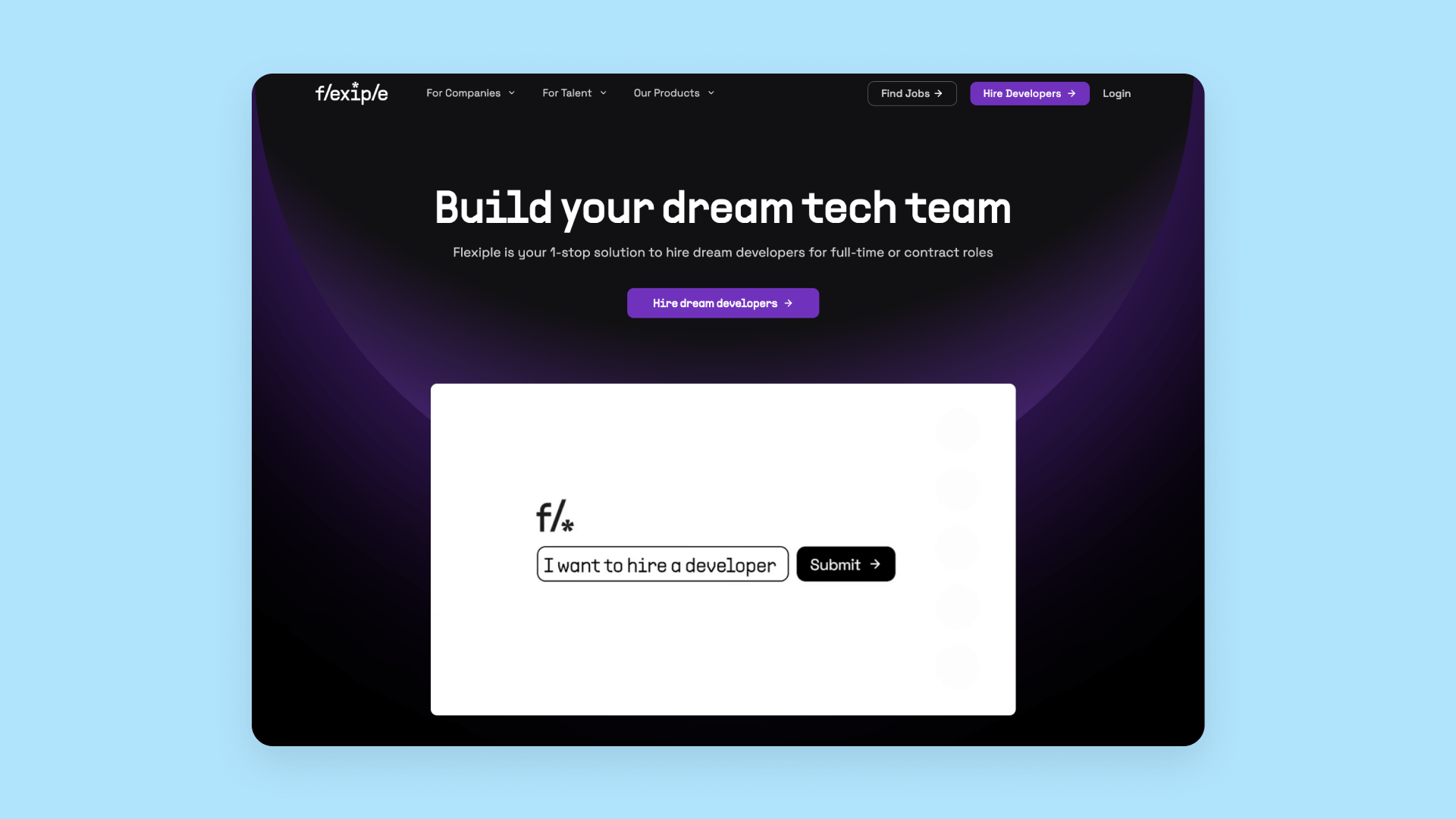
Flexiple is a great example of a standout job board—and it’s built on Bubble. Their goal is to connect top tech talent with companies who are hiring.
They started out with a rough MVP that worked by tying several tools together, but it had a lot of bugs. They quickly realized Bubble could be the affordable, simple solution to grow and scale their business. On Bubble, they’ve been able to design unique experiences for different types of Flexiple users, from job-seeking members to company recruiters.
“The level of empowerment Bubble gave me was great, and the speed with which we could build was so much quicker,” said co-founder Karthik Sridharan. Now, they’ve scaled to more than $3 million in annual revenue—with only one Bubble Developer on staff.
Brands Meet Creators

Brands Meet Creators created a non-traditional “job board” where brands and creators can connect directly about partnership opportunities and influencer marketing. Brands can post available opportunities and creators can reach out directly if they’re a good fit.
Or, brands can browse creators within certain filters or parameters to find UGC, organic partnerships, and so on. A rich database with strong filters and search functionality makes job boards like Brands Meet Creators effective — and Bubble’s endlessly customizable databases make that possible.
Community and review sites
Forums and online communities are some of the oldest kinds of web apps. Today, you can build sophisticated communities for your users, all without a single line of code. Commenting, reviews, and “ upvote” systems are fairly easy to implement on Bubble, which isn’t always possible on other platforms. You can also integrate your web app with other tools in your tech stack to track requests, customize moderation settings, and a whole lot more!
Deepwrk

Deepwrk combines elements of a community site with marketplace features, video conferencing tools, and more. On Deepwrk, users can take advantage of body doubling to meet (virtually) with another user and work on projects side-by-side for a set amount of time.
There’s also a dedicated community with rewards to gamify the experience and help users get more deep work done on a regular basis.
Calendar scheduling and booking, video conferencing, and workflows to reward completed sessions — the AI Agent can guide you through complex integrations like these step-by-step. Plus, a supportive community via a forum to stay accountable and share wins.
Social networks
Today’s social media giants have come under a lot of scrutiny, and tons of new platforms are popping up to try to create healthier, more human-focused social networks. If you have an idea for how social media could be better, Bubble is a great way to bring it to life.
Hampton
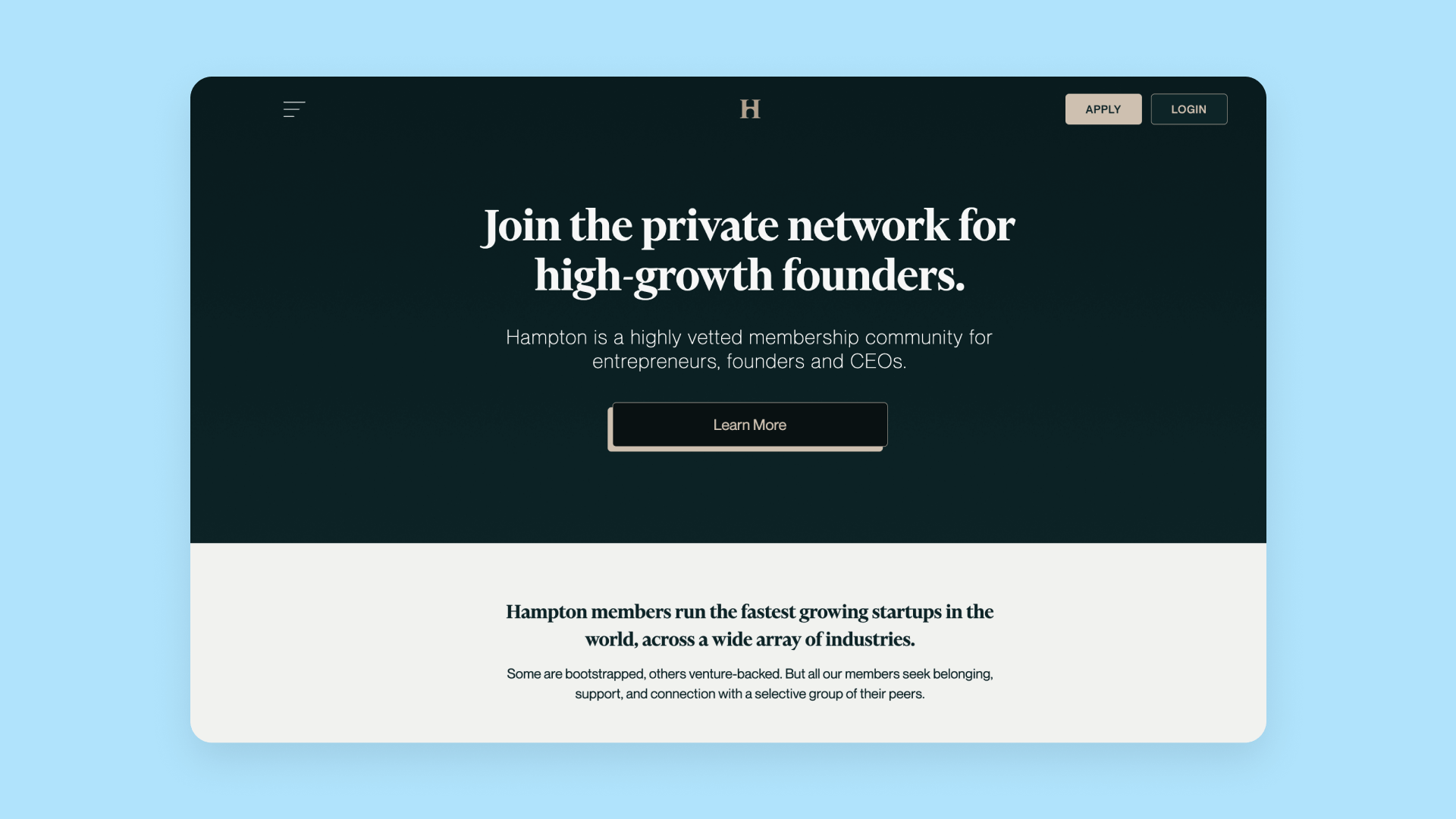
Hampton is a private, highly-vetted network for high-growth founders and CEOs. Co-founder Sam Parr (who built and sold the newsletter “ The Hustle ” to Hubspot a few years ago) built Hampton on Bubble to create the community he wanted to be a part of.
Bubble let Sam’s team build out all the features they needed for a truly valuable community.
Reddit Clone

You’d be forgiven if you hopped onto this Reddit clone built on Bubble and thought it was the actual Reddit site!
This is a conceptual build created by one of our community members, Victor. He built this Reddit clone in about two weeks to show founders what Bubble can do.
Nicheless
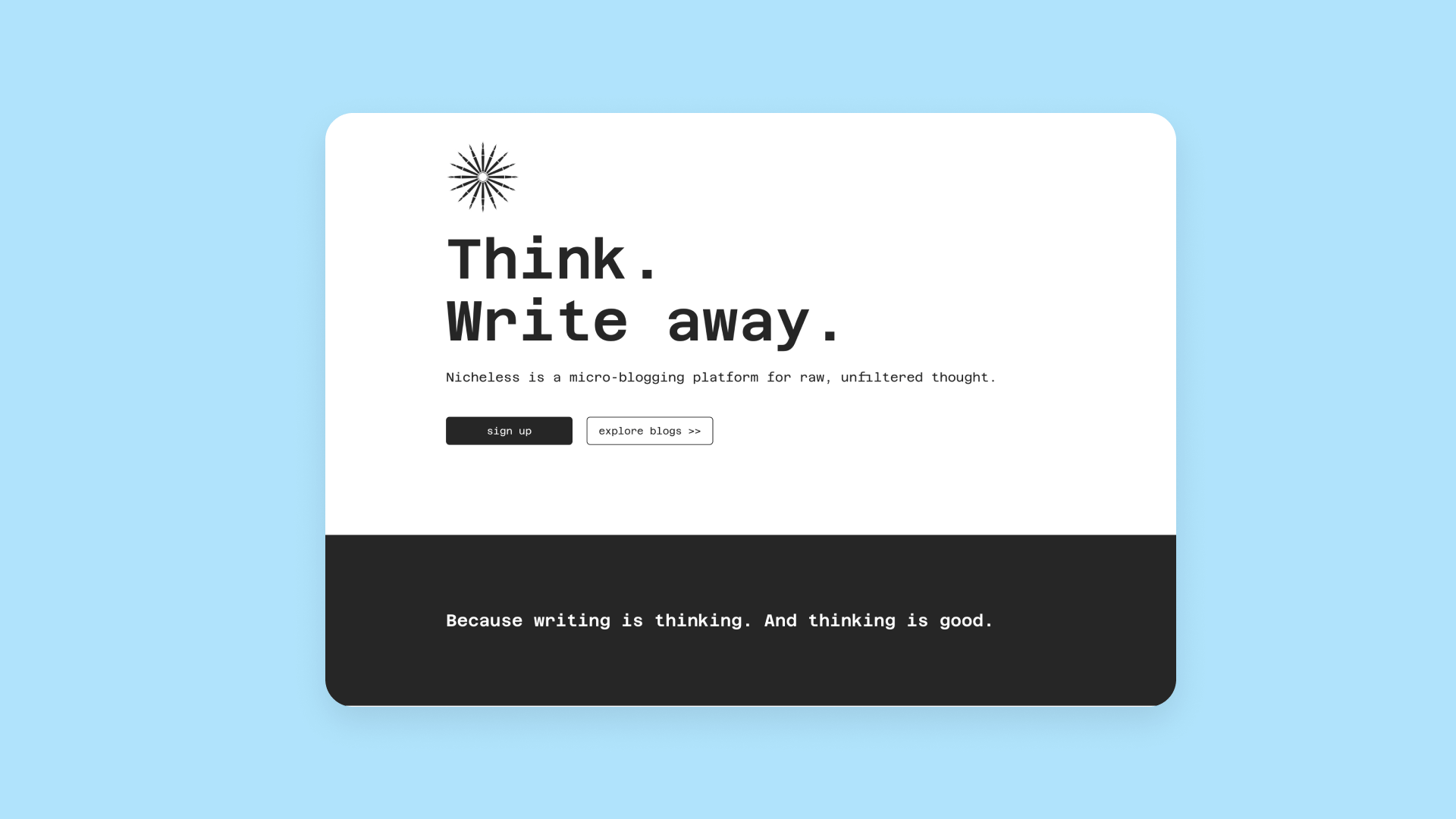
Nicheless is a micro-blogging site like Tumblr or Medium built on Bubble. Nicheless removes a lot of the status and growth-focused elements of writing online by hiding likes, comments, and subscribers, and instead focuses on providing a place where users can think “out loud,” be creative, and share and find thoughts on a wide variety of ideas.
Personal finance tools
Budgeting and invoice management tools are increasingly popular. Apps can offer simple ways to understand, manage, and save money more easily. Apps built on Bubble are no exception—whether it’s the ability to pay off debt, manage freelance earnings, track expenses, or something else, Bubble is a great (and secure!) platform for building personal finance tools.
Strabo
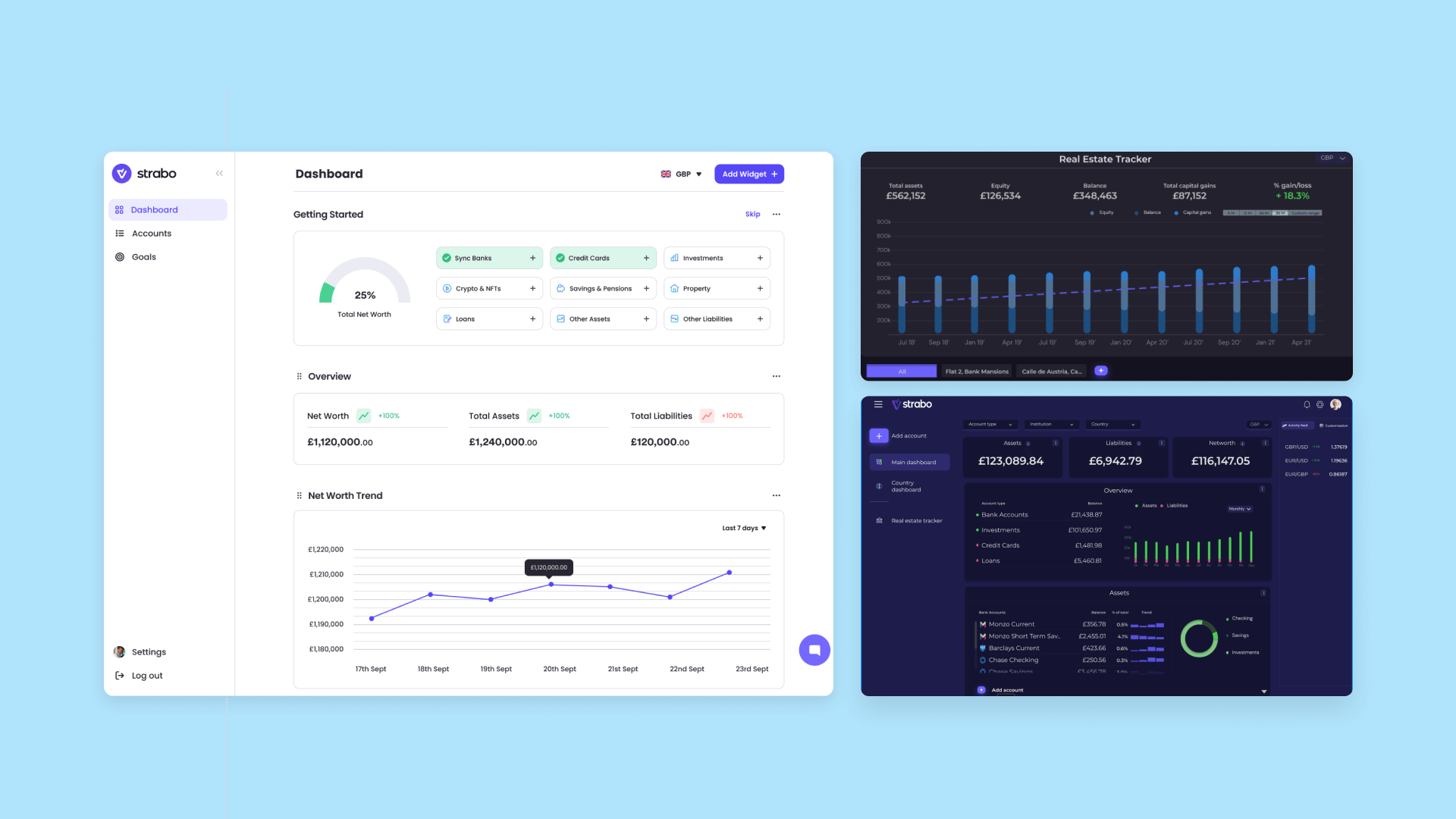
With Strabo, co-founders Michael Magdongon and Ben Waterman built the app they wanted to use themselves: a personal asset management tool built to handle international portfolios.
Bubble allowed them to build their app in less time, with fewer resources. But it also gave them the tools they needed to create powerful features.
For example, with Bubble's API connector and the AI Agent's step-by-step guidance, they could easily integrate the app with various banking institutions’ open APIs, giving users an at-a-glance view of their entire portfolio. Bubble’s robust databases allow users to further sort their portfolio by currency, location segmentation, or investment vehicle.
Educational tools
Digital education tools—for in-classroom or remote learning—are more important than ever. EdTech innovations are building new ways to help students of all ages, parents, and teachers organize curriculum and assignments, deliver engaging content, and empower students to succeed.
And now, students from major universities are turning to Bubble to create apps for school projects, passion projects, or startups. Whether you’re using Bubble as an educational tool or for an educational tool, we’ve got you covered.
GoodCourse

GoodCourse is a great example of using Bubble to deliver high-quality, engaging, and modern education. With GoodCourse, business education and training is delivered in a modern, “Tik-tok style” to capture and engage Millennial and Gen Z workers.
“ Bubble was the only platform that could end-to-end host our web application rather than trying to stitch together multiple tools at once,” co-founder Chris Mansfield said. Using Bubble's API connector — with the AI Agent's step-by-step guidance — the team integrated Twilio, PostMark, and Sertifier to build a tool that engages employees with micro-learning courses and content.
Even better: Bubble AI and visual editor together enable the rapid development they need to keep up with learning trends — generate features quickly with Bubble AI, then iterate with precision using visual editing based on user feedback.
Internal management tools and dashboards
One of the easiest ways to find the perfect project management tool or reporting dashboard for your team is to build your own—exactly what you need, exactly the way you want it. Bubble is an easy way to create the functionality you need.
MyBriefy

MyBriefy won Bubble’s 2024 Community Award for “Best Internal Tool.”
The tool was originally created for Global Titan Digital Marketing. The agency struggled with scattered client briefs, stored across email chains and Google Drives, which created disorganized projects, outdated information, and a poor client experience.
Now, with MyBriefy, everything is in one place. The team uses a built-in CRM, brief templates, notifications, and more — features that could be generated in minutes with Bubble AI today, then customized to match exact workflows.
Seagate
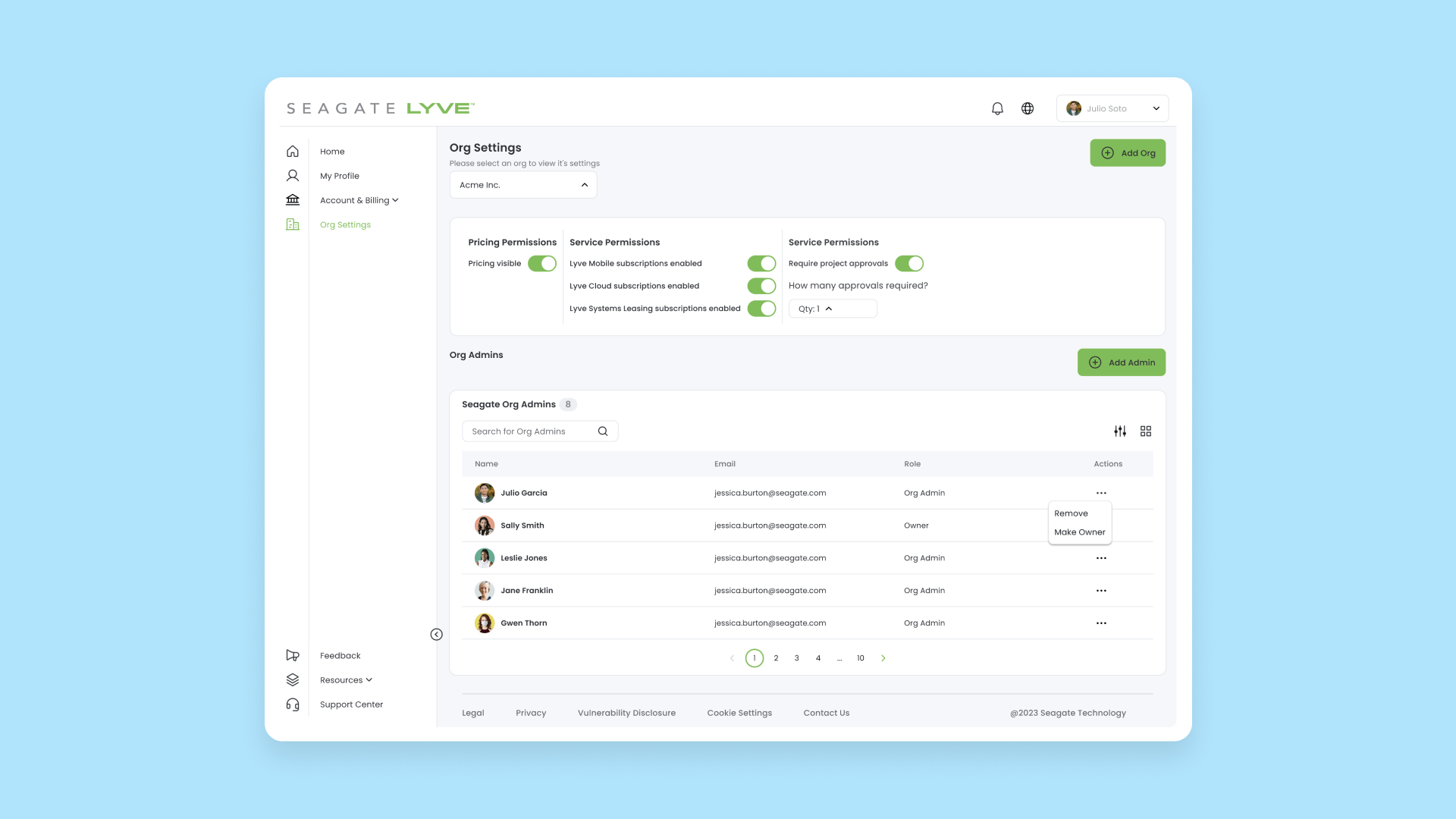
At Seagate, Product Manager and experienced Bubble Developer Michael Ong built a massive internal tool they call the “Admin Console.” It’s an internal hub that contains a suite of 11 different micro-apps, all built on Bubble.
Through the console, Seagate is able to manage everything from order fulfillment, other apps, and customer-facing work. Thankfully, Bubble's AI-powered platform offers enterprise-grade security to keep all their internal tools working smoothly.
They’ve even used Bubble to create a customer-facing management portal. Because Bubble is SOC 2 Type II compliant, the app was able to pass Seagate’s rigorous security standards easily. And now, Seagate customers can place device orders, invite others to that subscription, and grant remote access to that device via tokenized authentication—all in one, easy-to-access portal.
And it’s all powered by Bubble. Want to get started building your own dashboards and internal (or customer-facing) tools? Yep, we’ve got a guide for that, too. Get step-by-step details on all the features you’ll want to know, from building a user interface and setting up your databases to adding charts and more.
CRMs
A decade or more ago, building your own customer-relationship management tool (CRM) without code would have seemed impossible. But as no-code has evolved, it’s easier than ever for founders, product team leaders, and other non-technical makers to build their own custom software.
Whether you’re building an internal CRM to exactly suit the needs of your team or are hoping to build a CRM that can be used by thousands of other teams like yours, Bubble has the resources and platform ready to help you build and scale.
Revetize

Revetize is a CRM that allows businesses to run reviews, referrals, and loyalty campaigns. With Revetize, clients can pull in customer data and then automatically set up multi-channel drip campaigns, referral campaigns, and more. Even better: Clients can build all the landing pages, coupons, URLs, and other components necessary for these campaigns right in Revetize, creating a smooth, streamlined experience. Plus, real-time analytics and dashboards make it easy to see what’s working and what’s not.
Co-founder Richard Bitton came up with the idea when searching for something similar for his own company — they launched and monetized within three months.
Bubble AI can generate database structures and data types for any CRM type or industry. Then you have complete visual control to expand and customize for your exact use case. Get started on your own with our complete CRM guide, or get a step-by-step walk-through on building a CRM like Salesforce on Bubble — allowing you to replace expensive per-seat subscriptions that can cost SMBs over $100,000 annually.
SaaS apps
SaaS—Software-as-a-Service—is an exploding software category today, home to the likes of Slack, Asana, Salesforce, Hubspot, and more. Want to build your own SaaS tool? Bubble is a great platform to do it.
Bubble's truly no-code, AI-powered platform means you can build anything you need. Even better: AI-powered rapid development means you can test and iterate faster, achieving stronger product-market fit from day one and beyond. Bubble allows you to build these complex architectures without the technical debt of black-box AI code.
Aicado

Aicado was nominated for a Bubble Community Award in 2024 for “Best Use of AI” for their no-code AI implementation hub. In plain English, they help you customize AI models and integrate them into your website to suit your needs.
It’s still a smaller SaaS platform, but their site exceeds expectations for a SaaS website and their product checks all the boxes for their users—which just goes to show you don’t have to be a major enterprise tool to have a successful SaaS brand.
My AskAI

My AskAI won Bubble’s 2024 Community Award for “Best B2B Tool.” Their innovative and extensive use of Bubble's platform created a tool that’s truly transforming customer support for its users.
With My AskAI, teams can seamlessly integrate with other tools in their tech stack like Slack, Teams, and Zendesk, while also using AI support to simplify customer support and scale customer interactions—without sacrificing quality.
The AI Agent can generate workflows and guide API integrations step-by-step, and Bubble's plugin ecosystem helps make a coordinated, cohesive SaaS tool possible. And when we asked co-founder Alex Rainey for advice he would share with others considering visual development, Alex didn't mince words:
“Don’t listen to any of the negativity... the speed with which you can build on no-code and Bubble will completely set you apart from your competition and keep your costs super low,” he stresses. “I struggle to think of what you couldn’t build with a no-code builder like Bubble.”
Build anything with Bubble's no-code AI platform
In short: If you can dream it, you can build it on Bubble.
With Bubble, you get the speed of AI generation with complete visual control — in other words, vibe coding without the code. See exactly how your app works at every step, fix what AI can't, and launch something real.
Frequently asked questions about Bubble app examples
How much does it cost to build apps like these examples?
You can start building for free on Bubble and only upgrade when you're ready to launch. Our pricing scales with your usage, making it far more affordable than hiring traditional developers.
How long do these Bubble apps typically take to build?
While project timelines vary, many founders launch their first version in weeks, not months or years. You can generate a functional app with AI in minutes and iterate much faster than traditional coding. Plus, you're never limited to building with AI — you can always step in and take control yourself to work as efficiently as possible.
Do I need any coding experience to build complex apps like these?
No, you don't. Bubble combines AI and visual editing — AI can generate complex logic, databases, and privacy rules instantly, and you can refine everything visually. You see exactly how your app works without ever reading or writing code.
Can Bubble apps get accepted to the Apple App Store and Google Play Store?
Yes. With Bubble, you can build native mobile apps for iOS and Android from the same editor. We provide one-click publishing directly to both app stores, handling the technical submission process for you.
What's the most complex type of application that's been built on Bubble?
Builders have created enterprise-grade internal tools for Fortune 500 companies and scalable SaaS platforms serving millions of users. Our platform powers marketplaces processing over $1 billion annually and complex social networks. If you can envision it, you can likely build it on Bubble.
Build for as long as you want on the Free plan. Only upgrade when you're ready to launch.
Join Bubble